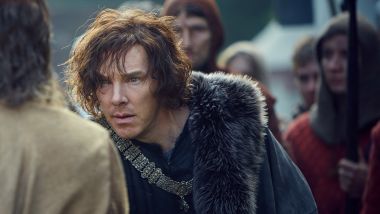
Favorite Shakespeare and Shakespeare-inspired films

Not the stuff on your shower tiles.

Moderator: surfer

User avatar
SqDanceCallingSteve
Posts: 1225
Joined: Thu May 28, 2015 12:31 pm
Location: Healdsburg CA
Contact:

Favorite Shakespeare and Shakespeare-inspired films

Post by SqDanceCallingSteve »

Dan suggested this thread (following his watching of Olivier's Richard III and my replying to his questions about "Buzz" in Shakespeare, see the film thread for 10/7).

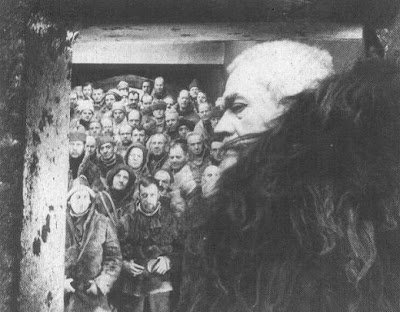
Let's kick it off with my all-time favorite, King Lear directed by Peter Brook, 1971, with Paul Scofield in the title role. It was filmed in the desolation and harsh weather of Jutland, primitive castles, in stark black and white, full of heavy silences and long uninviting landscapes.

Vincent Canby in The New York Times called it "an exalting Lear, full of exquisite terror."
Pauline Kael said "I didn't just dislike this production, I hated it!" and suggested the alternative title "Night of the Living Dead."

Image

The opening scene is led into by this long silent opening credit scrawl over the commoners waiting outside the unadorned chamber in which Lear is dividing up his kingdom:
https://www.youtube.com/watch?v=tyJEOcRyHOI


The King's trusted friend, the Duke of Kent, is imprisoned by his daughter Regan and her husband and put on the rack, bound to a large round stone. One of the film's magnificent shots is the camera panning away from Kent, toward the ceiling, as it slowly spins and Kent says "Fortune good night, smile once more, turn thy wheel."
The next morning, Lear and his fool enter Regan's court, and discover Kent in the outdoor stocks: https://www.youtube.com/watch?v=j4-fQbVohQ4

Lear curses Goneril, "how much sharper than a serpent's tooth it is to have a thankless child." https://www.youtube.com/watch?v=YRc49my ... 0TlKd4CQq7

Wholesale death late in the play: Edgar kills Edmund in filmdom's shortest major fight ("The wheel has come full circle – I am here."), Goneril kills her sister Regan and then kills herself in a suicide that always makes audiences gasp, followed by a quick cutaway to Cordelia being hung.
https://www.youtube.com/watch?v=Ff0vFSX ... 7&index=18

At exactly the same time that this film was being made, a Russian Lear was being filmed under the direction of Grigori Kozintsev, and the two directors were in touch with each other during the making of their Lears!
https://www.youtube.com/watch?v=qH8fVqbUToc
https://www.youtube.com/watch?v=m_WKWVYfbQM

Almost all of Shakespeare's plays close with the highest ranking nobleman making a summation speech, and we will honor that here:

https://www.youtube.com/watch?v=wNhGhVvUcu8
Last edited by SqDanceCallingSteve on Thu Oct 13, 2016 10:54 am, edited 1 time in total.
www.steveminkin.com

"Time is the school in which we learn,/ Time is the fire in which we burn."
Delmore Schwartz

Dan Warburton
Posts: 7920
Joined: Sun May 11, 2008 12:42 am

Re: Favorite Shakespeare and Shakespeare-inspired films

Post by Dan Warburton »

Good start to the thread! I don't know this one - yet! What do you make of the Welles Shakespeares, Steve? Can you forgive him for his daring remixes?
http://www.paristransatlantic.com
REISSUED! Eric La Casa / Jean-Luc Guionnet / Dan Warburton METRO PRE SAINT GERVAIS
https://swarming.bandcamp.com/album/met ... nt-gervais

j-p
Posts: 127
Joined: Tue Jan 26, 2010 7:50 am

Re: Favorite Shakespeare and Shakespeare-inspired films

Post by j-p »

Cool thread. Some middle-of-the-road suggestions from me below (I'm no expert):

Jubal is a pretty great western retelling of Othello

I'm quite partial to Polanski's bleak "The Tragedy of Macbeth". It also has a pretty crazy soundtrack to boot - violin, guitar drums, oboe, cello and vcs3! Not a fan of the Welles 1948 version which is just not a very good film imo (Welles makes a decent Macbeth though).

Still on the Macbeth trip; Kurosawa's "Throne of Blood" is an old favorite. And while I'm sure everyone here has seen it I've got to give a shout-out to "Ran" which is just on another level visually from almost anything else I've seen.

User avatar
SqDanceCallingSteve
Posts: 1225
Joined: Thu May 28, 2015 12:31 pm
Location: Healdsburg CA
Contact:

Re: Favorite Shakespeare and Shakespeare-inspired films

Post by SqDanceCallingSteve »

Regarding Welles, I'm not a purist at all. His films range from the sublime [Chimes At Midnight] to the ridiculous [Othello in ManTan], and vary widely in quality.

Ran and Throne of Blood certainly have to be looked at here.

For a few solid picks from recent decades you might try: Pacino's Merchant of Venice (which nicely captures the built-in dissonances of the play, "Willie Loman caught in a Cole Porter musical" as Bloom says); Ralph Fiennes' Coriolanus (a powerful film of an underrated play); and you might compare the two Much Ados -- Kenneth Branagh and Emma Thompson's traditional staging and the recent Joss Whedon modern dress version, a brilliant reimagining and one of my very favorite of all Shakespeares on film!
www.steveminkin.com

"Time is the school in which we learn,/ Time is the fire in which we burn."
Delmore Schwartz

Dan Warburton
Posts: 7920
Joined: Sun May 11, 2008 12:42 am

Re: Favorite Shakespeare and Shakespeare-inspired films

Post by Dan Warburton »

SqDanceCallingSteve wrote:Regarding Welles, I'm not a purist at all. His films range from the sublime [Chimes At Midnight] to the ridiculous [Othello in ManTan], and vary widely in quality.
What did you make of his Macbeth? I quite liked that one. (Didn't like the Justin Kerzel recent version with Fassbender, as you may recall) Haven't seen Othello for ages.
SqDanceCallingSteve wrote:Ran and Throne of Blood certainly have to be looked at here.
Word - Kurosawa's readings rock.
SqDanceCallingSteve wrote: Pacino's Merchant of Venice (which nicely captures the built-in dissonances of the play, "Willie Loman caught in a Cole Porter musical" as Bloom says)
Ha! Must check that out.. the Fiennes too.
SqDanceCallingSteve wrote:Kenneth Branagh and Emma Thompson's traditional staging
If you can deal with Denzel and the truly appalling Keanu Reaves, it's fun. Michael Keaton and Ben Elton are pretty leftfield too, but it works in a Pythonesque way
SqDanceCallingSteve wrote:and the recent Joss Whedon modern dress version, a brilliant reimagining and one of my very favorite of all Shakespeares on film!
Is that the one from New Zealand? I think I have that somewhere, must dig it up.
Keep the recommendations coming! I only have 1035 films in my "to watch" pile, what's a few more?
http://www.paristransatlantic.com
REISSUED! Eric La Casa / Jean-Luc Guionnet / Dan Warburton METRO PRE SAINT GERVAIS
https://swarming.bandcamp.com/album/met ... nt-gervais

User avatar
SqDanceCallingSteve
Posts: 1225
Joined: Thu May 28, 2015 12:31 pm
Location: Healdsburg CA
Contact:

Re: Favorite Shakespeare and Shakespeare-inspired films

Post by SqDanceCallingSteve »

Dan Warburton wrote: If you can deal with Denzel and the truly appalling Keanu Reaves, it's fun. Michael Keaton and Ben Elton are pretty leftfield too, but it works in a Pythonesque way
A secondary theme for this thread should be non-Shakespearean film and tv actors in these films. They vary widely in effectiveness. I thought Keaton was dreadful as Dogberry. OTOH, Whedon's version (American, using mostly television actors from his shows) uses Nathan Fillion (Castle, Firefly) brilliantly in the role.

I did a review for the Whedon film on the main film thread within the last few months. https://www.youtube.com/watch?v=AAMsDP_DMHE
www.steveminkin.com

"Time is the school in which we learn,/ Time is the fire in which we burn."
Delmore Schwartz

User avatar
walto
Posts: 4738
Joined: Sat May 10, 2008 7:58 pm
Location: Boston area

Re: Favorite Shakespeare and Shakespeare-inspired films

Post by walto »

I remember seeing the Peter Brook King Lear when I was an undergraduate in Ithaca. "0 let me not be mad, sweet heavens, not mad ! Keep me in temper: I would not be mad.” I was a little high and it scared me so much I almost had to leave the theater. But I was with a girl I kind of liked and didn't want to seem like a wuss, so I stuck it out--with the theater seeming to be shaking sometimes violently, sometimes very slightly. Very few movies have affected me like that. But, of course, it's the age and the state of the viewer, as well as the flick.

I'm also very fond of Welles' Chimes at Midnight, which only recently became available again, and the Nunn 1996 "12th Night"--although I think Imogen Stubbs' Viola was probably the weakest thing about it. I have a sense that the dawning age of transgenderism triumphant, there may be a believable Viola some day. (Albert Nobbs too.)

I'm also quite fond of the two Kurasawa movies mentioned above. Both the Olivier and the Welles Othellos are awful, but I kind of liked the Fishburne version (Parker 1995). I can't remember the Cleese Shrew very well, but I have the sense that it was very bad.

I like the over the top Branagh Henry V, (1989) but it's partly the moving soundtrack, I think.
"Freedom of thought and speech without available means of gaining information and methods of sound analysis, are empty. Protection and security are meaningless until there is something positive worth protecting." E.W. Hall

User avatar
Steve Minkin
Posts: 1677
Joined: Thu Nov 03, 2016 8:11 pm
Location: Healdsburg, California
Contact:

Re: Favorite Shakespeare and Shakespeare-inspired films

Post by Steve Minkin »

Here's my review of Welles' Falstaff film from last year's film thread:

Image

CHIMES AT MIDNIGHT, 1966

Orson Welles' "Fallstaff" film, which I had never seen before, understandable since it was unavailable for most of the decades of my life. The ownership is still in dispute, but the film is available on [url]YouTube: https://www.youtube.com/watch?v=Xf6fxz1mI6g[/url]

This is a masterpiece, one of the greatest of all the Shakespeare productions on film, and one of Welles' very best. [He said Chimes at Midnight was his favorite film, Citizen Kane notwithstanding. "If I wanted to get into heaven on the basis of one movie, that's the one I would offer up. I think it's because it is to me the least flawed; let me put it that way. It is the most successful for what I tried to do. I succeeded more completely in my view with that than with anything else."] It is as quirky as his Macbeth and Othello, but much more fully realized than either of those. I've only seen it once, but it reminds me of nothing less than the Brooks/ Scofield "Lear," my favorite of all Shakespeares on film – stark, visually gorgeous, powerful, idiosyncratic, and brilliantly acted.

Here is Roger Ebert's appreciation of the film: http://www.rogerebert.com/reviews/great ... night-1965

This is retelling of Henry IV parts 1 & 2 (plus tiny bits of Richard II, Merry Wives, and Henry V), with Falstaff in the foreground and the political drama as the landscape. John Gielguld as Prince Hal's father, Henry IV, is magisterial in the role. His gravitas is weighty enough to move the historical plot single-handedly, although it doesn't fall entirely on him. Some of King Henry's key speeches are left more or less intact – 'uneasy lies the head that wears a crown' and his dying to advice to Harry to start a foreign war to take the heat off his domestic problems (even as we do today). Margaret Rutherford and Jeanne Moreau give life to the tavern/ bawdy house, and other accomplished actors fill out the cast. And Welles was born to play Falstaff.

Considering Welles never had more than 180 extras working for him at any one time, the big scenes are extraordinary illusions as well as masterpieces of film and visual art. The Battle of Shrewsbury (you'll swear there are thousands of soldiers) and the brothel dance scene both sizzle with life and seem immense.

Hal's rejection of Falstaff (after his coronation) still stings, but there is a wonderful moment in this production where we can see Hal's view of Fallstaff sink before our eyes. Following Hal's killing of Hotspur ("O Harry, thou hadst robbed me of my youth"), Falstaff makes the outrageous claim that Hotspur rose again after the Prince thought he killed him, and it was actually Falstaff who killed the rebel. It's a comic scene, everybody knows Falstaff always lies about these things, but in this production it is also clear that Hal sees it as disrespectful to Percy and to the seriousness of the implications for England, and he looks at Falstaff with obvious contempt.

I love this film! If you're into Welles or Shakespeare, it's a must see. If you're not, you still might want to check it out.

User avatar
Steve Minkin
Posts: 1677
Joined: Thu Nov 03, 2016 8:11 pm
Location: Healdsburg, California
Contact:

Re: Favorite Shakespeare and Shakespeare-inspired films

Post by Steve Minkin »

Here's a good link to Ebert's review. Sorry to see the film has been removed from youtube:
http://www.rogerebert.com/reviews/great ... night-1965

User avatar
Steve Minkin
Posts: 1677
Joined: Thu Nov 03, 2016 8:11 pm
Location: Healdsburg, California
Contact:

Re: Favorite Shakespeare and Shakespeare-inspired films

Post by Steve Minkin »

Image
Image
Image
Image


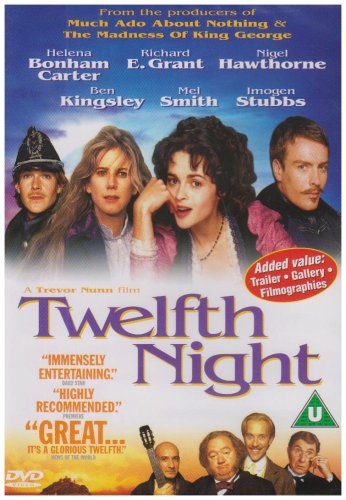
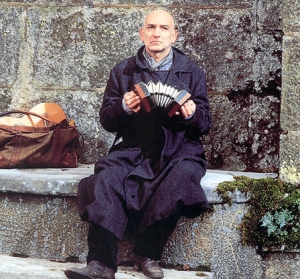
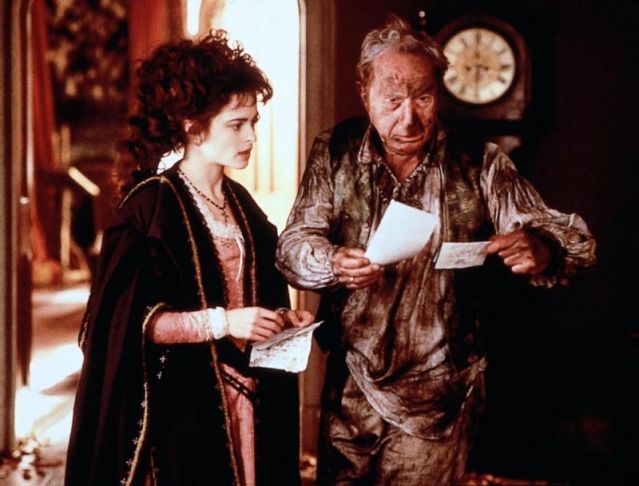
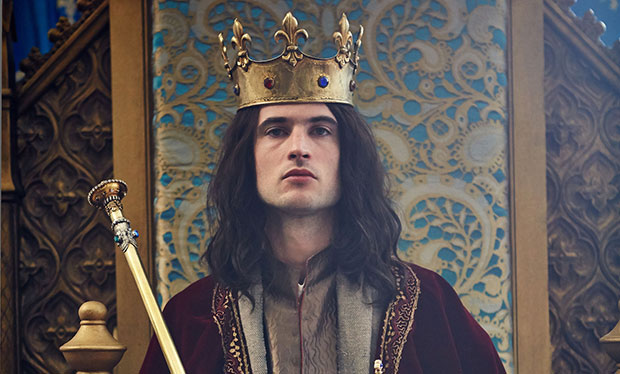
Strong recommendation for Trevor Nunn's TWELFTH NIGHT (1996). This was Will's last comedy before he entered his Problem Plays period, comedies (happy endings) that were far too dark in many ways to be real comedies, and the darknesses are starting to creep through the cracks. And Nunn faces this head-on, especially with relation to Malvolio, played by Nigel Hawthorne in the film's shining performance, by turns repulsively self-righteous, laughably ridiculous, and poignantly sympathetic. Ben Kingsley as Feste and Imogene Stubbs as Viola are also outstanding, and Helena Bonham-Carter is fine as Olivia. Beautiful eighteenth century setting. A couple of nice cinematic touches that stood out – an opening act featuring the gender-bending similarities between the twins followed by a powerful storm scene, and some finely done intercutting back and forth between Feste's song to Toby, Andrew and Maria (in The Kitchen Scene, II, iii), "Then come kiss me sweet and twenty./ Youth's a stuff will not endure,") and the following scene's deliciously devious dialogue about love between Orsino and Viola/ Caesario. (I can see you're in love, what does she look like? Oh, your complexion. How old? About your age.)

Here's Ebert's review of the film: http://www.rogerebert.com/reviews/twelfth-night-1996

User avatar
walto
Posts: 4738
Joined: Sat May 10, 2008 7:58 pm
Location: Boston area

Re: Favorite Shakespeare and Shakespeare-inspired films

Post by walto »

As I've mentioned here before, I love that movie. One of my faves. My only problem is with Stubbs. That part is waiting for a realistic (perhaps trans-gender?) actor.
"Freedom of thought and speech without available means of gaining information and methods of sound analysis, are empty. Protection and security are meaningless until there is something positive worth protecting." E.W. Hall

User avatar
Steve Minkin
Posts: 1677
Joined: Thu Nov 03, 2016 8:11 pm
Location: Healdsburg, California
Contact:

Re: Favorite Shakespeare and Shakespeare-inspired films

Post by Steve Minkin »

Viola was an easier casting consideration in Will's time, when all the female parts went to boys.
The main casting problem for this play in contemporary theater is finding 'twins.'

User avatar
Steve Minkin
Posts: 1677
Joined: Thu Nov 03, 2016 8:11 pm
Location: Healdsburg, California
Contact:

Re: Favorite Shakespeare and Shakespeare-inspired films

Post by Steve Minkin »

Steve Minkin wrote:some finely done intercutting back and forth between Feste's song to Toby, Andrew and Maria (in The Kitchen Scene, II, iii), "Then come kiss me sweet and twenty./ Youth's a stuff will not endure,") and the following scene's deliciously devious dialogue about love between Orsino and Viola/ Caesario. (I can see you're in love, what does she look like? Oh, your complexion. How old? About your age.)
Here's the very scene itself. And the intercutting is perfectly appropriate -- Orsino and Viola are listening to his court musician(s) play the song that Feste sang for Orsino and his court the previous night, according to the text, so it's quite likely to be the same song:

https://www.youtube.com/watch?v=h8kA2zx8isk

Since I'm the professional singer in the group, I've increasingly begun casting myself to sing the featured songs in most plays. I'm gaining a whole new repertoire. I'll do Feste in Act II, for the above song and this dark one: https://www.youtube.com/watch?v=y1X7kfjvQ4o, and Feste again in the last act for the closing song (that prefigures one of Lear's fool's songs): https://www.youtube.com/watch?v=FhSfZpl ... 228.404225

User avatar
walto
Posts: 4738
Joined: Sat May 10, 2008 7:58 pm
Location: Boston area

Re: Favorite Shakespeare and Shakespeare-inspired films

Post by walto »

Steve Minkin wrote:Viola was an easier casting consideration in Will's time, when all the female parts went to boys.
The main casting problem for this play in contemporary theater is finding 'twins.'
Have you seem the PBS thing narrated by Joseph Fiennes about Romeo and Juliet? Clips from many different performances were shown, including one recent one done with all male actors. It was a really interesting show, including discussions with various professors and theater mavens.

Maybe your group saw it when you last did that play--if it had been released already.
"Freedom of thought and speech without available means of gaining information and methods of sound analysis, are empty. Protection and security are meaningless until there is something positive worth protecting." E.W. Hall

User avatar
Steve Minkin
Posts: 1677
Joined: Thu Nov 03, 2016 8:11 pm
Location: Healdsburg, California
Contact:

Re: Favorite Shakespeare and Shakespeare-inspired films

Post by Steve Minkin »

No, haven't seen it. And I've got my DVR programmed to record all Shakespeare-related shows and films. Not sure why it was missed. I'll look into it.

User avatar
walto
Posts: 4738
Joined: Sat May 10, 2008 7:58 pm
Location: Boston area

Re: Favorite Shakespeare and Shakespeare-inspired films

Post by walto »

"Freedom of thought and speech without available means of gaining information and methods of sound analysis, are empty. Protection and security are meaningless until there is something positive worth protecting." E.W. Hall

User avatar
Steve Minkin
Posts: 1677
Joined: Thu Nov 03, 2016 8:11 pm
Location: Healdsburg, California
Contact:

Re: Favorite Shakespeare and Shakespeare-inspired films

Post by Steve Minkin »

Just watched the 1969 British TV production of Twelfth Night
https://www.youtube.com/watch?v=DuwgQ9Qof88

Very entertaining and accessible version. The television production tightens up the focus -- it's more like a stage play than a film.

Accepting Viola's cross-dressing as Caesario is central to the play, but I think this is something that can vary considerably from one audience member to another. Personally, I think Joan Plowright's performance in this television version is be the best and most convincing Viola/Caesario I have ever seen. She also plays Sebastian (one way to finesse the twin problem!) in subtly different makeup and a slightly harder voice. While Stubbs' Caesario (in the Nunn film) is soft and vulnerable, Plowright's here is brash and confident. She was a mature 40 at the time, and Orsino and Olivia (a stunning Adrienne Corri) are also older, which makes Olivia's maturity easier to accept.

This is Plowight's Sebastian and Viola:
Image

And Corri's Olivia, Tommy Steele in the foreground, Ralph Richardson's Toby in the back:
Image

In the 1930s, Ralph Richardson enjoyed several triumphs in the role of Sir Toby, and he brings a masterful understanding of the character to this version, filled with all kinds of stage business he's added over the years. Toby is the play's largest role, and Richardson makes the most of it, a memorable performance!

Alec Guiness as Malvolio is quite good with the physical humor, but lacks the power and poignancy of Nigel Hawthorne's rendering in the Nunn film. The only character that's played younger than usual is Feste, rendered by Tommy Steele, who provides solid rendiditions of the songs and an unusually animated Feste, but his performance lacked the bittersweet gravitas that Kingsley brought to the role.

I thoroughly enjoyed this version, and think it might be the first one I would recommend to newbies to the play, because of its clarity and economy.

User avatar
Steve Minkin
Posts: 1677
Joined: Thu Nov 03, 2016 8:11 pm
Location: Healdsburg, California
Contact:

Re: Favorite Shakespeare and Shakespeare-inspired films

Post by Steve Minkin »

Image

Image

Image


first half, first disc, HOLLOW CROWN TWO, THE WARS OF THE ROSES

The BBC's second Hollow Crown series (The Wars of The Roses) opens with Judith Dench reading a radically shortened version of Ulysses' speech on degree from Troilus and Cressida, concluding with "Take but degree away, untune that string,/ And, hark, what discord follows!"

That provoked this lively response by a Nottingham blogger:
>>With a slight pause before them, the words “Take but degree away, and mark what discord follows”’ hang over this new trilogy as an epigraph. I find it hard not to read this, in the context of English civil wars, as a message to ‘respect your betters’ or ‘Say what you like about structural inequality and inherited privilege, but it keeps people in line’. If those pesky commoners don’t challenge anything, we’ll all get along happily, and fortunately for the BBC, the Jack Cade rebellion is being cut from this Henry VI trilogy (in an unfathomable decision – why cut the best scenes of the whole sequence, unless the BBC’s legal team really can’t stand to hear ‘Let’s kill all the lawyers’?), so there’s no real challenge to monarchy in this adaptation, just a question over which monarch should wear the crown.<<

The Hollow Crown a is much more engaging and more cinematic rendition than the BBC canon films. It is also severely cut and less faithful to the originals. Part 1 of HVI is covered in the first half of the first disc – a mere hour! -- leaving out most of Joan's sections, the charming scene between Talbot and the Countess of Auvergne (II, iii), and much of the rest of the play. On the plus side, the visuals are beautiful, featuring some truly magnificent old churches and castles, and the acting is strong.

User avatar
Steve Minkin
Posts: 1677
Joined: Thu Nov 03, 2016 8:11 pm
Location: Healdsburg, California
Contact:

Re: Favorite Shakespeare and Shakespeare-inspired films

Post by Steve Minkin »

About start on our rereading of Richard III. We've mentioned Olivier's, which I'll see again, and Cumberbatch's, which I'm about to watch. But I haven't mentioned Ian McKellan's version, which I love! I will watch it again, and report back on all of them.

But here is a remarkable document via my Shakespeare discussion board -- McKellan's extensive scene-by-scene notes for his film:
http://www.mckellen.com/cinema/richard/ ... /index.htm


+++

I posted this on the Shakespeare thread in BOOKS, on the second disc of the BBC's WAR OF THE ROSES, the third being Cumberbatch's RIII.

Image

If we are to factor into our judgment of Shakespeare films the relative strength of the original material, then I think that disc 2 of the BBC's War of The Roses, corresponding to Henry VI, Part 3, is one of the best of them all. The BBC was granted wide access to many historical sites, castles, cathedrals, fields, etc., and the cumulative visual effect is stunning. This disc introduces Benedict Cumberbatch as a youthful Richard (Gloucester), and he is superb in the role – vicious, vulnerable, and fascinating. The portrayals of the battle scenes are vivid, unglamorized (if a tad too bloody), and powerful. The scene with the father who killed his son and son who killed his father sounds contrived on the page, but the production brings it to life. The director back-loads all of Richard's powerful soliloquies from throughout the play into the end of the disc, providing a riveting finale and setting the stage for Cumberbatch's RIII. As was the case in Disc 1 (Parts 1&2), the director plays fast and loose with the text, not only making many major excisions in this disc but also inventing an entirely new scene: Clifford, mortally wounded, pleads to be put out of his misery; Richard declines because he wants Clifford to suffer; and King Henry finds himself unable to do it, turns away from Clifford and loses his lunch. I found it to be such a strong scene that I had to check to see if I missed it in the text.

User avatar
Steve Minkin
Posts: 1677
Joined: Thu Nov 03, 2016 8:11 pm
Location: Healdsburg, California
Contact:

Richard III, first notes, second go-round, three films

Post by Steve Minkin »

These Shakespeare notes heavily involve three versions of the plays, so I'll take the unusual step of posting them in both forums.

Hope you are all safe and suffered no losses from the fires!

Emily and Joe were evacuated from their home in Bennett Valley, and have moved to the safety of our brother's house. Our son lives on Coffey Lane(!), had been staying with our daughter and is now back at his place, which somehow survived.

To understand Richard III, Auden directs us to Hitler's speech to his general staff, 1939, a week or so before invading Poland. An excerpt: "Essentially all depends on me, on my existence, because of my political talents. Furthermore, the fact that probably no one will ever again have the trust of the whole German people as I have. There will probably never again in the future be a man with more authority than I have. My existence is therefore a factor of great value.” Why does that so readily bring to mind the unhinged grandiosity of the current inmate in the White House?

I have used some of the time of my unexpected week off from calling to watch three excellent versions of RIII – Olivier (1955, traditional, in vivid pageantry Technicolor!), McKellen (1995, set in a counterfactual 1930s Nazi England), and Cumberbatch (2016, BBC, conclusion of a series including the three HVI plays, traditional staging in historical settings). I will use the films here as perspectives on a couple of the play's themes.

A prefatory note on history: as was noted the first time around, the historical Richard did not commit all the crimes attributed to him in this play. Also, Will uses massive time-compression here, for the sake of moving the play along, which completely distorts the historical time-line: Richard served successfully for twelve years as administer of the northern territories for his brother, King Edward, and he reigned as King for two years, not the bloody couple of weeks in the play. Shakespeare adhered to the Tudor version of history, a prudent stance since RIII's conqueror in Act V (Richmond, later HVII) was Queen Elizabeth's grandfather. Josephine Tey's novel, The Daughter of Time, finds her detective recuperating in the hospital and delving into the case of RIII's real and imagined crimes. The title is derived from the Latin proverb translated as "Truth is the daughter of time."

And a couple of miscellaneous notes:
RIII is the longest play in the canon except for Hamlet.
The words “mother,” “children,” and “dream” appear in this play more frequently than anywhere else in the canon.
Composer William Walton provides the sound track for the Olivier version, and the cast includes Ralph Richardson (Olivier really wanted Orson Welles to play Buckinghan, and was dissatisfied with Richardson's performance), Cedric Hardwick, John Gielguld and Claire Bloom.

HOW TO PLAY RICHARD? There have to be certain commonalities, basic givens: viciousness, calculation, a dry wit (which abandons him late in the play, more on this later), a deep resentment at the physical body nature has cursed him with, a charismatic confidence in his abilities to dissemble and conquer, an energetic and enthusiastic sadism . . .

Olivier's Richard is the coldest of the three, seemingly invulnerable, conveying an aggressive sense of entitlement neither of the other versions has. McKellen's Richard (as a haughty, British aristocrat) is also icy throughout, but not as overtly brash as Olivier, and burdened by the sense of being too tightly wound, showing cracks around the edges. Cumberbatch's Richard is by far the most sympathetic I have ever seen, openly sharing vulnerabilities with the audience, clearly affected by the slights of others, capable of suffering. I found it a refreshingly entertaining interpretation.

As with Macbeth, the villain in this play is immeasurably more interesting than any of the good guys.

Auden notes that the three early arch-villains of the London theater – Marlowe's Barabas, RIII, and Aron (from Titus Andronicus) – are a Jew, a hunchback, and a Moor, "all outside the norm;" or, as we might say today, all easy targets for Othering.


THE WOMEN OF RICHARD III
I think we can all agree that coming to RIII after having done the three HVI plays immediately preceding it gives one a greater appreciation of the women of RIII, who can too often be dismissed as the four crazy old queens. Bloom doesn't give them much more than that, opining that “none of the women's parts are playable.” Bloom goes on to say that in Juliet and later characters Shakespeare takes women's roles to new heights, but “no one could surmise that on the basis of Richard III.”

All three films give more space to the women that is often accorded them in productions, but they vary widely. The BBC (Cumberbatch) version, which follows the women through the earlier plays, gives them extensive space. Margaret – here in her fourth consecutive history play – is reduced to a kind of revenant of an earlier age, a ritual curser , chorus, and prophetess of doom. The other queens have distinct personalities and functions in the play, and with their collective meeting in Act IV they seem to form a cohesive anti-Richard sisterhood. The film's final shot is of a crazed Margaret wandering among hundreds of bodies on Bosworth field, as the camera pans up and away from the ground.

Margaret is completely left out of the other two productions. McKellen casts Maggie Smith as the Duchess of York (folding some of Margaret's lines into the part), Annette Bening as Queen Elizabeth, and Kristin Scott Thomas as Lady Anne. The women are visible throughout in McKellen's version.

Olivier film has considerably less of a women's presence than the other two versions; and yet, at the time, Olivier was noted for giving the women more lines in the play than they were typically getting at the time. Claire Bloom's Anne seems genuinely taken with Richard in I, ii, after his ruse of offering to let her kill him , but the scene still seems of a bit a stretch. The other versions seem even less credible to me. The first time I read Richard III was in 1970, with The Birnham Wood Company in San Francisco, and we all stopped and said, “Too fast!” at the scene's conclusion – I'm not sure I've changed my mind since.


RICHARD LOSES HIS MOJO -- Most analyses of the play see Richard losing his confidence and his wit shortly after the time he is crowned, and each of the films deals with this in a different way. With Cumberbatch being the most visibly vulnerable of the Richards, his fall is the easiest to track. His last overtly sly witticism comes during that deliciously devilish Act III, scene 7, in which Richard creates an elaborately staged fake event in collaboration with Buckingham and Catesby to get the Lord Mayor of London and the Alderman to insist that he become king despite his supposed protestations against having to do it. In pretending to yield to the crowd, Cumberbatch plays the line “I am not made of stones” directly to audience, clearly ironically and laughing at the dupes who imagine that they have persuaded him to be king. But that is his last laugh with us. Shortly after this, he is crowned, orders Buckingham to murder the princes in the tower, and is frustrated and furious that Buckingham balks at this. The dark mood deepens, unrelieved by his wit. An accompanying non-verbal sign of his deterioration is his chessboard – Cumberbatch's Richard plays chess constantly throughout the play, sitting at right angles to the pieces and playing both sides. (Mercifully, they have the board set up correctly in the film, with white squares in the lower right-hand corners.) But after his coronation, he does not make moves, he only clicks the marble pieces incessantly and annoyingly against the board.

McKellen's ice turns hot at that scene when Buckingham balks at killing the princes, and he never again regains the cool command of earlier scenes. He becomes overtly emotional at his mother's cursing of him, and meets a fiery death in the end that evokes James Cagney's “top of the world, ma!' moment, falling from a height into flames, Al Jolson crooning “I'm sitting on top of the world” as the closing credits start to roll.

Olivier's descent is the least visible. His humor throughout is mean-spirited and of a piece with his sadism, intended for himself and only incidentally shared with the audience. He maintains his privileged air of entitled authority throughout. The closest he comes to genuine emotion is his barely contained joy at his coronation, and yet contain it he does. The film includes a striking non-verbal exchange between Richard and Buckingham – after the coronation, Buckingham goes to embrace Richard, as he has when celebrating their previous triumphs. But this time Richard offers his hand to be kissed. After recovering himself, Buckingham reaches for the hand, and Richard lowers it so Buckingham has to kneel to kiss it. Brilliant!

Olivier's Richard first shows weakness on the eve of the battle, V, iii, saying, “I have not that alacrity of spirit/ Nor cheer of mind that I was wont to have.” Then follows his bad dreams, his murder victims visiting him and ordering him to “despair and die.”

By morning, Olivier's Richard declares, "Richard's himself again," spoken to the camera on the morning of the battle of Bosworth. The line is not by Shakespeare, but comes from an acting edition of Shakespeare's text by Colley Cibber (1671-1757). Cibber's rewrite of the play was the primary stage version from 1700 to the late 1800s.

We're still scheduled for Wednesday, November 8, three days after Rita and I return from Antwerp, Amsterdam, Rouen, Hanfleur, London, and Bath. Hope to see you there, and safe journeys!

Steve

Here's a couple from the Shangri-Las, The Mymidons of Melodrama:

https://www.youtube.com/watch?v=9YrH_imO6kg

https://www.youtube.com/watch?v=SC4NmZSlDeY