
jon, i have pinball 1973 in PDF format somewhere, i can send it along if you want to continue with your completism. it's very available in print anymore, i lost a few ebay auctions for it back in the day. i agree with yuko's assessment, though i have some affection for 'hear the wind sing' that likely wouldn't hold up on a re-read. don't think
hated remainder but i didn't realize that until maybe the last third. didn't want to say that much about it before because i didn't want to taint your reading.
m
Currently Reading: Chapter II
Moderator: michael

Re: Currently Reading: Chapter II
oh, thanks, but I have the Kodansha version of that too. those tiny books are a little hard to hold for my big American paws, though...
Re: Currently Reading: Chapter II
Speaking of referents, the opening scene in the Prado reminded me strongly of Bernard's Old Masters. Pretty good so far.surfer wrote:About 50 pages in:
Leaving the Atocha Station - Ben Lerner
Re: Currently Reading: Chapter II
been wondering about the lerner novel, surfer. interested in your impressions. i like his poetry a lot but can't really think of what his prose would be like.
and jon, i probably just needed a connection to japan back then too.
m
and jon, i probably just needed a connection to japan back then too.
m
-
Dohol

- Posts: 2885
- Joined: Sat May 10, 2008 3:47 pm
- Location: In the heart of the evil empire..
- Contact:
Re: Currently Reading: Chapter II

“In a kind of middle-aged crisis, it dawned upon me that there was a possibility that music might not even be an art form.”
Morton Feldman
http://soundcloud.com/doug-holbrook
Morton Feldman
http://soundcloud.com/doug-holbrook
Re: Currently Reading: Chapter II
Its not anything like his poetry based on my time with The Lichtenberg Figures. The enjoyment of this novel (now 70 pages in, trying to make this short book last as long as I can) lies in the tension between the protagonist's neurotic, awkward, questioning, dishonesty; and the narrator's calm, reasoned, blunt honesty. His digressions on art and artifice, poetry and expression (particularly across languages and cultures), and what it means to live "authentically" and experience, well, anything, are very eloquent:mudd wrote:been wondering about the lerner novel, surfer. interested in your impressions. i like his poetry a lot but can't really think of what his prose would be like.
and jon, i probably just needed a connection to japan back then too.
m
pg 63-65"These periods of rain or periods between rains in which I was smoking and reading Tolstoy would be, I knew, impossible to narrate, and that impossibility entered the experience: the particular texture of my loneliness derived in part from my sense that I could only share it, could only describe it, as pure transition, a slow dissolve between scenes, as boredom, my project's uneventful third phase, possessed of no intrinsic content. But this account ascribed the period a sense of directionality, however slight or slow, make it a vector between events, when in fact the period was dilated, detached, strangely self-sufficient, but that's not really right.
During this period all like periods of my life were called forth to form a continuum, or at least a constellation, and so, far from forming the bland connective tissue between more eventful times, those times themselves became mere ligaments. Not the little lyric miracle and luminous branching injuries, but the other thing, whatever it was, was life and was falsified by any way of talking or writing or thinking that emphasized sharply localized occurrences in time. But this was true only for the duration of one of these seemingly durationless periods; figure and ground could be reversed, and when one was in the midst of some new intensity, kiss or concussion, one was suddenly composed exclusively of such moments, burning always with this hard, gemlike flame. But such moments were equally impossible to represent precisely because they were ready-made literature, because the ease with which they could be represented entered and canceled the experience where life was supposed to be its most immediate, when the present managed to differentiate itself with violence, life was at its most generic, following the rules of Aristotle, and did not make contact with the real but performed such contact for an imagined audience.
That is what I felt, if it wasnt what I thought, as I smoked and listened to the rain on the roof and turned the pages and smelled the wet stone of Madrid through the windows I kept cracked. And when I read the New York Times online, where it was always the deadliest day since the invasion began, I wondered if the incommensurability of language and experience was new, if my experience of my experience issued from a damaged life of pornography and privilege, if there were happy ages when the starry sky was the map of all possible paths, or if this division of experience into what could not be named and what could not be lived just was experience, for all people for all time. Either way, I promised myself, I would never write a novel."
The only potential turnoff would be if you find the book a tiring narcissistic monologue from a spoiled barely talented Western dilettante who bluffs his way into a Fulbright, and spends most (all) of his time getting stoned and drunk, and trying to avoid all Americans. But I like it.

Re: Currently Reading: Chapter II
nice, thank you. going to have to give that one a read.
m
m
-
Dohol
- Posts: 2885
- Joined: Sat May 10, 2008 3:47 pm
- Location: In the heart of the evil empire..
- Contact:
Re: Currently Reading: Chapter II
Re-reading:

great book..
great book..
“In a kind of middle-aged crisis, it dawned upon me that there was a possibility that music might not even be an art form.”
Morton Feldman
http://soundcloud.com/doug-holbrook
Morton Feldman
http://soundcloud.com/doug-holbrook
Re: Currently Reading: Chapter II

Hopefully I'll finish this one too! I've currently got a rather impressive pile of books covering music/sound theory/aesthetics which I've begun and never finished. There is a tendency for these texts to be incredibly verbose (Listening to Noise and Silence is the first thing that comes to mind), which is just fine, except I do a lot of my reading on underground trains where I find it difficult to properly concentrate.
Re: Currently Reading: Chapter II
I found this book to be very annoying & depressing. The text seemed generally facile, often doing little more than offering examples of the subtitle without any actual analysis.jamess wrote:
Hopefully I'll finish this one too! I've currently got a rather impressive pile of books covering music/sound theory/aesthetics which I've begun and never finished. There is a tendency for these texts to be incredibly verbose (Listening to Noise and Silence is the first thing that comes to mind), which is just fine, except I do a lot of my reading on underground trains where I find it difficult to properly concentrate.
Also, it has to be one of the worst designed and worst proofread books I've seen in at least thirty years.
Re: Currently Reading: Chapter II
That is discouraging... I had wondered when the author would stop pointing out that the Southbank Show features more avant-garde visual artists than musicians and start discussing why... I thought he was going to get more to the point in the second chapter as he starts talking about how painting was forced into being non-representative by photography. Your comments suggest I am wrong in this?Herb Levy wrote:I found this book to be very annoying & depressing. The text seemed generally facile, often doing little more than offering examples of the subtitle without any actual analysis.jamess wrote:
Hopefully I'll finish this one too! I've currently got a rather impressive pile of books covering music/sound theory/aesthetics which I've begun and never finished. There is a tendency for these texts to be incredibly verbose (Listening to Noise and Silence is the first thing that comes to mind), which is just fine, except I do a lot of my reading on underground trains where I find it difficult to properly concentrate.
Also, it has to be one of the worst designed and worst proofread books I've seen in at least thirty years.

Re: Currently Reading: Chapter II
Wow, is he really saying this? Because that would simply be nonsense, and I wouldn't at all trust him on people getting Rothko.jamess wrote:Herb Levy wrote:jamess wrote:I thought he was going to get more to the point in the second chapter as he starts talking about how painting was forced into being non-representative by photography.
Zero books are a bloody shame. They are "committed to the idea of publishing as a making public of the intellectual" (huh? but I know what's meant and I agree with their statement against "consensual culture"). Their programme is very interesting. But they seem to hate books, tons of mistakes, factual, grammatical or spelling-wise, the last one I tried to read was Heatherley's Militant Modernism, and the images do not at all go with the text, you'd have to google on the side to even grasp the text. I think most of the series is cool blog posts made meaningless by the switch of media.
Re: Currently Reading: Chapter II
I've put in the specific passage beneath. But, I think he's right about Rothko. There is certainly a "schysm" -as Stubbs terms it- between the mass interest in avant-garde art and avant-garde music. Whilst not everyone understands Rothko, most people will recognise that it is art (even if it is art that they don't like). To call Rothko nonsense would be considered by many a statement of lack of intelligence on your part (as Stubbs points out). On the other hand, I have come to expect (even within my own peers) that experimental music will be looked upon as silly, pointless or worst of all: pretentious. "A urinal signed R.Mutt? Masterful! Helicopter String Quartet? Pretentious."Wombatz wrote: Wow, is he really saying this? Because that would simply be nonsense, and I wouldn't at all trust him on people getting Rothko.
Zero books are a bloody shame. They are "committed to the idea of publishing as a making public of the intellectual" (huh? but I know what's meant and I agree with their statement against "consensual culture"). Their programme is very interesting. But they seem to hate books, tons of mistakes, factual, grammatical or spelling-wise, the last one I tried to read was Heatherley's Militant Modernism, and the images do not at all go with the text, you'd have to google on the side to even grasp the text. I think most of the series is cool blog posts made meaningless by the switch of media.
- David Stubbs: Fear of Music P.19Visual art was put under pressure to change in a way that musuc wasn't- by the rise of photography, which, to anyone who could read the writing on the wall, promised to render figurative representation in art largely obsolete.
Re: Currently Reading: Chapter II
Can't agree. Actually Duchamp is still often perceived by "people" as the guy with whom the decline of art began. Helicopter String Quartet? Featured in an entry on the children's page of the completely conservative Gewandhaus mag this year. Juggling around supposed mass interests is absolutely meaningless, and completely rigged through the Rothko/Stockhausen coupling. How bout "Why people get Rothko and also enjoy Feldman" Or "Why people don't get Stockhausen and also are clueless about Beuys except the coyote was cool?"
Thanks for the quote, in case you're interested: he is not making up that narrative himself of course. And photography indeed posed a threat for certain genres like portraiture or if you sold your little views of Montmartre. You will also find tons of painters saying: I don't need to paint reality, photography does that better, but that's a different point really. If you look at the development: already in the 19th century artists were using photographs, even overpainting photographs they made as studies and selling them off as work; photography at least until the 1920s was aspiring to the condition of painting (as did silent film); photography was inspiring anybody from McNeill Whistler to Futurists to Bacon and today show me the painter who doesn't work from photographs. It was an additional tool from the beginning, never a threat ...
I think Stubbs knows he's cheating, though, because his convoluted sentence sort of almost avoids the outright lie.
Thanks for the quote, in case you're interested: he is not making up that narrative himself of course. And photography indeed posed a threat for certain genres like portraiture or if you sold your little views of Montmartre. You will also find tons of painters saying: I don't need to paint reality, photography does that better, but that's a different point really. If you look at the development: already in the 19th century artists were using photographs, even overpainting photographs they made as studies and selling them off as work; photography at least until the 1920s was aspiring to the condition of painting (as did silent film); photography was inspiring anybody from McNeill Whistler to Futurists to Bacon and today show me the painter who doesn't work from photographs. It was an additional tool from the beginning, never a threat ...
I think Stubbs knows he's cheating, though, because his convoluted sentence sort of almost avoids the outright lie.
Re: Currently Reading: Chapter II
I'm certainly interested. I picked up the book in the first place because I was interested in the problem and am certainly willing to hear more than one argument (especially one so opposed to the other). Visual art is something I have an amateur interest in. I have never studied it. What I know is gleaned from biographies, galleries and scattered readings of essays and manifestos that take my interest, so on this point I can't really form a properly backed argument.Wombatz wrote:Can't agree. Actually Duchamp is still often perceived by "people" as the guy with whom the decline of art began. Helicopter String Quartet? Featured in an entry on the children's page of the completely conservative Gewandhaus mag this year. Juggling around supposed mass interests is absolutely meaningless, and completely rigged through the Rothko/Stockhausen coupling. How bout "Why people get Rothko and also enjoy Feldman" Or "Why people don't get Stockhausen and also are clueless about Beuys except the coyote was cool?"
Thanks for the quote, in case you're interested: he is not making up that narrative himself of course. And photography indeed posed a threat for certain genres like portraiture or if you sold your little views of Montmartre. You will also find tons of painters saying: I don't need to paint reality, photography does that better, but that's a different point really. If you look at the development: already in the 19th century artists were using photographs, even overpainting photographs they made as studies and selling them off as work; photography at least until the 1920s was aspiring to the condition of painting (as did silent film); photography was inspiring anybody from McNeill Whistler to Futurists to Bacon and today show me the painter who doesn't work from photographs. It was an additional tool from the beginning, never a threat ...
I think Stubbs knows he's cheating, though, because his convoluted sentence sort of almost avoids the outright lie.
Re: Currently Reading: Chapter II

Now in a $18.99 version we all can enjoy.
Re: Currently Reading: Chapter II
I'm reading that also, about halfway through, on mr. mudd's recommendation.
not that I want to read anything about it until I'm done, but Gerardo said last night there was discussion about that book here earlier, and I couldn't find almost any with a few searches.
not that I want to read anything about it until I'm done, but Gerardo said last night there was discussion about that book here earlier, and I couldn't find almost any with a few searches.
Re: Currently Reading: Chapter II
There wasnt a discussion, I just asked what it was about. Mudd was the only one who had read it.
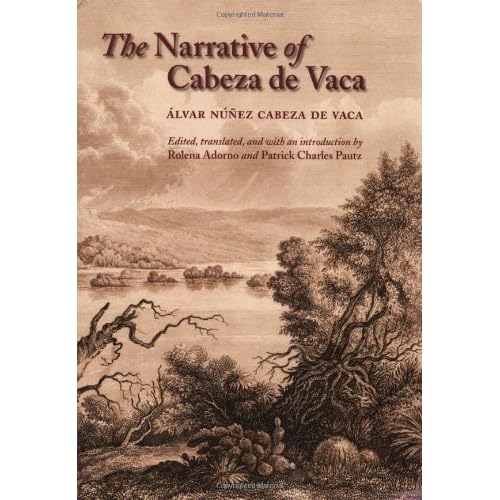
I'm 50 pages in (1 chapter) and I've enjoyed it. I cant get the image of John Laroquette and the great "Biz" Markie Post out of my head though:

I'm 50 pages in (1 chapter) and I've enjoyed it. I cant get the image of John Laroquette and the great "Biz" Markie Post out of my head though:

Re: Currently Reading: Chapter II
ok, I'm done now, I'll reserve my comments for when you're done also, Darren.surfer wrote:There wasnt a discussion, I just asked what it was about. Mudd was the only one who had read it.
I'm 50 pages in (1 chapter) and I've enjoyed it.