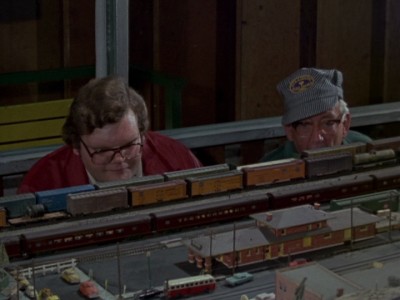
Ida Lupino, Outrage, 1950
I can't for the life of me figure out why this masterpiece isn't mentioned in the same breath as the great noirs and melodramas of the late 40s / early 50s. Actually, that's not true: I can – because a) it's a cunning mixture of noir and melodrama (with psychology and political attitude thrown in for good measure) and b) it was directed by a woman. There's a case for saying Outrage is one of the great – first? – feminist films. Not because it shows a woman taking the upper hand in a man's man's man's world – far from it, as it charts Ann Walton's descent into a personal hell after being raped after work (spurned by her workmates, insufficiently supported by her parents and fiancé, running away to seek anonymity packing oranges in rural California before the unwelcome attention of another man tips her over the edge altogether) – but because it does seek to outline, if only by pointing to their absence, possible "movements and ideologies aimed at defining, establishing, and defending equal political, economic, and social political rights for women", to quote the rather bland Wikidefinition. The principal actors, Mala Powers and Tod Andrews (as the intriguing lay priest Bruce Ferguson – we never do find out what caused him to "lose his faith" as an injured soldier during the war in Italy), are absolutely superb – calling this a B-movie is doing a serious disservice to all concerned – and the script, by Collier Young and Marvin Wald (who also penned Dassin's excellent Naked City), is as subtle and multilevelled as anything you might find in a vintage Sirk. But Lupino's camerawork is as important a player as the actors and what they do and say: quite apart from the Hitchcockian expressionist touches (the thud of the rubber stamps in the office, the accelerating intercutting panic of the identity parade) and the obvious symbolism (count the number of times Ann is seen behind bars – either on her bedroom windows, or behind a fence, or – for real – in jail), Lupino's choice of camera angle is masterly. And the end of the film, where Ann disappears altogether – a bus pulls up in front of the camera and drives off again without our seeing her getting on it – is stunning. This is so good that as soon as it finished we watched it all the way through again.





 Have a few misgivings about this too: