

yeah lets keep this bitch going
I am listening to that east african witchcraft and ritual songs nonesuch disc, its really cool
Afrika 101

Re: Afrika 101
well, for some single artist releases, it might have been mentioned already, but the one I heard for the first time this week that I really liked was Geraldo Pino-Heavy Heavy Heavy. a bit formulaic, a bit Latin jazz-y, but really good.
one I didn't like was Chrissy Zebby Tempo-My Ancestors, it reminded me a little of the second wave of the Krautrock craze a while back, meaning after the high quality stuff emerges, there's some discs that are forgotten for a reason.
and, lastly, one I thought was OK to nice was Amanaz-Africa, a bit on the mellower side but worth checking out at least.
oh, and William Onyeabor-Atomic Bomb doesn't quite live up to its title or the track from it that's been on about three comps so far, but it's also OK.
one I didn't like was Chrissy Zebby Tempo-My Ancestors, it reminded me a little of the second wave of the Krautrock craze a while back, meaning after the high quality stuff emerges, there's some discs that are forgotten for a reason.
and, lastly, one I thought was OK to nice was Amanaz-Africa, a bit on the mellower side but worth checking out at least.
oh, and William Onyeabor-Atomic Bomb doesn't quite live up to its title or the track from it that's been on about three comps so far, but it's also OK.
Re: Afrika 101
yeah thats a good way to put it. Good recorda bit formulaic, a bit Latin jazz-y, but really good.

Re:
I love The Water Wheel.Clay wrote: Hamza El Din - Escalay: The Water Wheel
East African Witchcraft and Ritual Music
On one of my frequent random listens of african, improv, blues, cage, etc., The Water Wheel segued into the first track from Marchetti's "Knud Un Nom De Serpent". I totally freaked out!
A disc that comes very close to the "Witchcraft" is "The Arthur Alberts: More Tribal, Folk and Café Music of West Africa". From water percussion to ritual chants to blues roots. this disc is all over the place.

From what's already mentioned, I totally love all the Felas mentioned, the Ali Farka Toure's "Radio Mali" and the Orch Baobab "Pirates Choice". I still remember when Andy Kershaw (my favorite BBC dj in the 80s) first aired Utrus Horas in 87. Firmly a top 5 song for me.

great thread folks!
Re: Afrika 101
This is my first posting here and admittly registered to beginn with a querry. Sorry. Is Original Music still around any source to get their releases today?bombinthebeehive wrote:DB has provided us with a great list
Yoruba Street Percussion comp Original Music CD16 1992
Azagas and Archibogs:The Sixties Highlife of Lagos OMCD 14
The Kampala Sound: 1960's Ugandan Dance Music
I.K. Dairo- Juju Master comp 1990
Before Benga Vo1. :Kenya Dry, Before Benga Vol.2:The Nairobi Sound
Songs the Swahili Sing: Tanzanian Field Music
African Acoustic: Guitar Songs from Zambia,Tanzania and Zaire
Kabaka's Oriental Brothers International- Do Better If You Can Cd
Madam Comfort Omoge & Madam Mujidat Ogunfalu- Noruba Women of the Drum
Orlando Owoh- Dr Ganja's Polytonality Blues
Lucky Stars and Frozen Mornings:The 60's Ibadan Juju Scene
Kickin Kukuyu Style: Sam Chege's Ultra-Benga
Money Be No Sand:60's Afro-lypso,Pidgin Highlife,Afro Soul and Afro Rock
African Moves: Soukous, Highlife and Juju Music
Juju Roots: 1930-50
add to it and discuss music of africa
im like henderson in this piece.
I used to buy there CDs serveral years ago and own most of the releases mentioned but have lost contact with them. It's an outstanding label!
Re: Afrika 101
no they went out of buisness in the late 90s if not earlier. All their stuff is OOP it sucks. You can still get some stuff at amazon otherwise its ebay, soulseek, or public libraries
Re: Afrika 101
Thanks! Even though I expected them being out of business I'm  While I never cared for their non-african releases I think I should have bought all their releases feat. music from Africa while they were available. Even those cds I've hardly gave listen I'd never considered bad or waste of money. I simply couldn't get wrong with their stuff.
There are/were several European/American labels publishing African music but when it comes to dedication and knowledge on various African music while totally ignoring commercial aspects Original Music was absolutley outstanding.
Speaking on African music: French Ocora has some brilliant cds as well:
Zaire: Musique urbaines à Kinshasa; Burundi: musiques traditionelles.
While I never cared for their non-african releases I think I should have bought all their releases feat. music from Africa while they were available. Even those cds I've hardly gave listen I'd never considered bad or waste of money. I simply couldn't get wrong with their stuff.There are/were several European/American labels publishing African music but when it comes to dedication and knowledge on various African music while totally ignoring commercial aspects Original Music was absolutley outstanding.
Speaking on African music: French Ocora has some brilliant cds as well:
Zaire: Musique urbaines à Kinshasa; Burundi: musiques traditionelles.


Re: Afrika 101
Been listening a ton to zam rock since the turn of the year inasmuch as one can.
Witch -- Introduction, not very good compared to the next one, 1/3 instrumental, very important to note this music has nothing to do with West African/Fela cinnamons, arguably closer to Traffic. "Like a Chicken" is a highlight. Bear in mind the drummer on both Witch discs is a spaz.
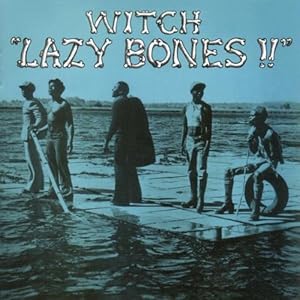
Witch -- Lazy Bones !!, amazing, the Duprat-like concrete crying before "Motherless Child", "Black Tears", glazed fretboard Rickenbacker 12 string "Strange Dream", "Off Ma Boots", A+ throughout. On the back of the CD: "To those of you who have been unkind and deliberately troublesome, we suggest you go jump in the lake specially featured for you on our cover." We intend to cause havoc!
Chrissy Zebby Tembo & Ngozi Family -- My Ancestors, think of native American collective flaIling + late 60s grime, truly weird African drone rock, the pick of the litter thus far. Only out on LP which I found at Bomp (at a clip), the most solid-state guitar record I've ever heard. Ozzy?
http://www.youtube.com/watch?v=muQFi8JOOkw&NR=1
Amanaz -- Africa, really like this, dripping honey, "Khala My Friend" sounds like something you've heard before. Out of tune some of the time. Recorded from the back pew for sure. Great driving or cooking music.
Fidelity is brutal on all these, drums always way in the back, but lots of incident sweat on the Tembo. I still need to get The Peace Black Power so bad, "Get On The Way" oh man.
Witch -- Introduction, not very good compared to the next one, 1/3 instrumental, very important to note this music has nothing to do with West African/Fela cinnamons, arguably closer to Traffic. "Like a Chicken" is a highlight. Bear in mind the drummer on both Witch discs is a spaz.
Witch -- Lazy Bones !!, amazing, the Duprat-like concrete crying before "Motherless Child", "Black Tears", glazed fretboard Rickenbacker 12 string "Strange Dream", "Off Ma Boots", A+ throughout. On the back of the CD: "To those of you who have been unkind and deliberately troublesome, we suggest you go jump in the lake specially featured for you on our cover." We intend to cause havoc!
Chrissy Zebby Tembo & Ngozi Family -- My Ancestors, think of native American collective flaIling + late 60s grime, truly weird African drone rock, the pick of the litter thus far. Only out on LP which I found at Bomp (at a clip), the most solid-state guitar record I've ever heard. Ozzy?
http://www.youtube.com/watch?v=muQFi8JOOkw&NR=1
Amanaz -- Africa, really like this, dripping honey, "Khala My Friend" sounds like something you've heard before. Out of tune some of the time. Recorded from the back pew for sure. Great driving or cooking music.
Fidelity is brutal on all these, drums always way in the back, but lots of incident sweat on the Tembo. I still need to get The Peace Black Power so bad, "Get On The Way" oh man.
Last edited by MRS on Sat Feb 12, 2011 10:25 pm, edited 4 times in total.
Re: Afrika 101
just played a track off the amanaz album on radio today. fine stuff.
right now i'm listening to this 'bran new wayo' comp on comb and razor, and having a hard time with it. english language disco that could have come from anywhere.
m
right now i'm listening to this 'bran new wayo' comp on comb and razor, and having a hard time with it. english language disco that could have come from anywhere.
m

Re: Afrika 101
Yes!MRS wrote: On the back of the CD: "To those of you who have been unkind and deliberately troublesome, we suggest you go jump in the lake specially featured for you on our cover." We intend to cause havoc!
You, of all people, should understand
Re: Afrika 101
Never saw this thread before, pretty good so far. I'll try to add some more recommendations later, but for now, the biggest omission imo is Rokia Traore, who is not only a wonderful musician and songwriter, but a rolemodel for women and girls throughout Africa. Here is a short blurb I wrote about her for another website, please excuse the "press release-ish" quality of it:
To understand why Rokia Traoré is one the most important and significant artists of the aughts, it’s crucial to know a little something about who she is and where she comes from.
Ms. Traoré is from Mali, the village of Kolokani, born into the Bamana tribe. The caste to which her family belongs discourages music making. Furthermore, in the two and a half years I spent living and working while in the Peace Corps in West Africa, I never saw a woman play an instrument. It is unusual for a female to play a guitar and sing; most female lead singers are of the Miriam Makeba, Oumou Sangare, and Cesaria Evora chanteuse / diva style. While her father was stationed abroad as a diplomat, Ms. Traoré traveled to Algeria, Saudi Arabia, France and Belgium, but attended both lyceé and university in Mali, where she began performing her own songs on acoustic guitar. She soon learned to play the ngoni (lute) and balafon, as well as incorporate complex vocal harmonies in her songs, which is again atypical for Malian music.
Her first album Mouneïssa was released in 1997, and Wanita in 2000. Both albums on Label Bleu would strike even a seasoned African music aficionado as unique because of the way in which she isolates and juxtaposes traditional Malian instruments in small groupings that resemble a chamber ensemble. This clearly isnt mbalax, or afrobeat, or Wassalou, or jali praise songs, or toureg. “I'm not a Malian traditional singer", she says, "I can't say what style I am". Despite the rich polyphony of the vocals, and the counterpoint of the instrumentation, there is an airiness, a sense of letting the sounds breathe and have space to flex, that distinguishes Ms. Traoré’s music from other African music styles and singers. She writes and arranges all of the music herself.
Her outspoken lyrics regarding the role and oppression of women in West African society has made her a bit of an outcast in her native Mali. She has addressed such sensitive and controversial topics such as polygamy, forced marriage, female circumcision, and gender inequalities in education, while at the same time, singing the praises of Malian families, and the religious tradition.
On the song Kôté Don, she sings in her native Bamana
Ever changing, I dislike what is rigid, set
What “is” without knowing why
All that is hierarchical, static
I respect my ancestors,
But tradition is not infallible
It is not absolute
Time passes, we all change
Nothing remains the same.
This is for you, young people,
Let’s dance the kôté.
In 2006, Ms. Traoré was involved in writing and performing a new work for the New Crowned Hope festival, staged by the maverick director Peter Sellars, to celebrate the 250th anniversary of Mozart's birthday. Her typically unconventional work (an opera) imagined that Mozart was born as a griot, a musician by birth, back in the time of the great Thirteenth century ruler Soundiata Keita, whose Mande empire was centerd in what is now Mali. The instrumentation included traditional West African instruments, guitar and bass, violin and clarinet.

To understand why Rokia Traoré is one the most important and significant artists of the aughts, it’s crucial to know a little something about who she is and where she comes from.
Ms. Traoré is from Mali, the village of Kolokani, born into the Bamana tribe. The caste to which her family belongs discourages music making. Furthermore, in the two and a half years I spent living and working while in the Peace Corps in West Africa, I never saw a woman play an instrument. It is unusual for a female to play a guitar and sing; most female lead singers are of the Miriam Makeba, Oumou Sangare, and Cesaria Evora chanteuse / diva style. While her father was stationed abroad as a diplomat, Ms. Traoré traveled to Algeria, Saudi Arabia, France and Belgium, but attended both lyceé and university in Mali, where she began performing her own songs on acoustic guitar. She soon learned to play the ngoni (lute) and balafon, as well as incorporate complex vocal harmonies in her songs, which is again atypical for Malian music.
Her first album Mouneïssa was released in 1997, and Wanita in 2000. Both albums on Label Bleu would strike even a seasoned African music aficionado as unique because of the way in which she isolates and juxtaposes traditional Malian instruments in small groupings that resemble a chamber ensemble. This clearly isnt mbalax, or afrobeat, or Wassalou, or jali praise songs, or toureg. “I'm not a Malian traditional singer", she says, "I can't say what style I am". Despite the rich polyphony of the vocals, and the counterpoint of the instrumentation, there is an airiness, a sense of letting the sounds breathe and have space to flex, that distinguishes Ms. Traoré’s music from other African music styles and singers. She writes and arranges all of the music herself.
Her outspoken lyrics regarding the role and oppression of women in West African society has made her a bit of an outcast in her native Mali. She has addressed such sensitive and controversial topics such as polygamy, forced marriage, female circumcision, and gender inequalities in education, while at the same time, singing the praises of Malian families, and the religious tradition.
On the song Kôté Don, she sings in her native Bamana
Ever changing, I dislike what is rigid, set
What “is” without knowing why
All that is hierarchical, static
I respect my ancestors,
But tradition is not infallible
It is not absolute
Time passes, we all change
Nothing remains the same.
This is for you, young people,
Let’s dance the kôté.
In 2006, Ms. Traoré was involved in writing and performing a new work for the New Crowned Hope festival, staged by the maverick director Peter Sellars, to celebrate the 250th anniversary of Mozart's birthday. Her typically unconventional work (an opera) imagined that Mozart was born as a griot, a musician by birth, back in the time of the great Thirteenth century ruler Soundiata Keita, whose Mande empire was centerd in what is now Mali. The instrumentation included traditional West African instruments, guitar and bass, violin and clarinet.
Re: Afrika 101
From another thread on kora music (http://ihatemusic.noquam.com/viewtopic. ... 550#p71469),
Oral traditions of the griot are passed down through the family. Traditionally griots and specifically kora players were reciters or family and tribal and village history. They would move from village to village receiving payments from the wealthiest patrons to recite their family history and its relation to the village. We had a few jalis come through my village, and they would go into the big patron's courtyard and start reciting about the greatness of said patron, and the patron would put money at his feet (if you ever go to a concert of West African music, it is customary for the audience to throw money at the performers onstage), and the jali would keep playing and saying what a great servant of Allah he is, and so generous, and his father was brave and was a carpenter and helped build this village etc etc etc. Then the jali would move on to the next patron.
Tradional jali music was always more boring to me than other types of West African music, because its basically like listening to Arlo Guthrie do Alice's Restaurant, same repeated riff over and over with some variations, but only the story is about family history of Joe Lavelle of Fond Du Lac, Wisconsin.
The best version of this traditional type of kora music is Jali Musa Jawara who is from Guinea:
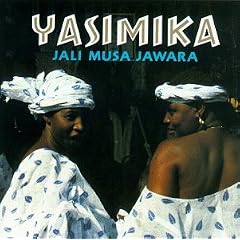
I like it because although its traditional (4 long recitations), it also includes accompanying instruments like guitars and balafon.
Of the newer non-traditional pop music, I like Toumani Diabate's Djelika

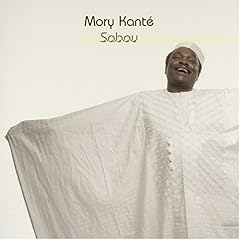
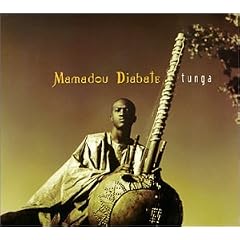
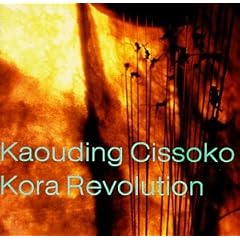
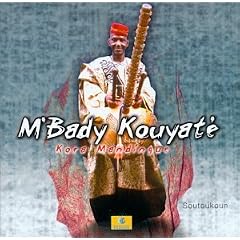
Those are all the ones I can remember buying on cassette in Guinea. They're all pretty good. If I coudl recommend one, it'd probably be the Mory Kante
Oral traditions of the griot are passed down through the family. Traditionally griots and specifically kora players were reciters or family and tribal and village history. They would move from village to village receiving payments from the wealthiest patrons to recite their family history and its relation to the village. We had a few jalis come through my village, and they would go into the big patron's courtyard and start reciting about the greatness of said patron, and the patron would put money at his feet (if you ever go to a concert of West African music, it is customary for the audience to throw money at the performers onstage), and the jali would keep playing and saying what a great servant of Allah he is, and so generous, and his father was brave and was a carpenter and helped build this village etc etc etc. Then the jali would move on to the next patron.
Tradional jali music was always more boring to me than other types of West African music, because its basically like listening to Arlo Guthrie do Alice's Restaurant, same repeated riff over and over with some variations, but only the story is about family history of Joe Lavelle of Fond Du Lac, Wisconsin.
The best version of this traditional type of kora music is Jali Musa Jawara who is from Guinea:
I like it because although its traditional (4 long recitations), it also includes accompanying instruments like guitars and balafon.
Of the newer non-traditional pop music, I like Toumani Diabate's Djelika
Those are all the ones I can remember buying on cassette in Guinea. They're all pretty good. If I coudl recommend one, it'd probably be the Mory Kante
Re: Afrika 101
This is well worth your time:

as is almost any archival release Sterns puts out...Rail Band, Franco, Etoile de Dakar
as is almost any archival release Sterns puts out...Rail Band, Franco, Etoile de Dakar
Re: Afrika 101
Yeah, Sterns is a great label, those early Etoile de Dakar albums are magic:rottenhat wrote: as is almost any archival release Sterns puts out...Rail Band, Franco, Etoile de Dakar

volumes 2 and 4 are my favorites.
Re: Afrika 101
Love this song, I believe a different, shorter, better quality version appears on volume 2 pictured above, pure excitement.
Re: Afrika 101
I only managed to get volume 2 before they went OOP, alas. Stern's have a new-ish double out, which presumably compiles the same material...I'll have to do a tracklist comparison to see how much of it I already have. I should probably swipe their two Tabu Ley Rochereau doubles as well.surfer wrote:
Yeah, Sterns is a great label, those early Etoile de Dakar albums are magic:
volumes 2 and 4 are my favorites.

Did nobody mention King Sunny Ade yet? "Synchro System" has to be one of the greatest of all time.
Re: Afrika 101
I feel like bumping this, and I'll do so with a record I heard for the first time about a month ago that rules.

"The Linda represent one of the main branches of the Banda, the most important ethnic group in the Central African Republic. Their favourite instruments are horns made from tree roots hollowed out by termites or for higher pitches they use antelope horns with side mouthpieces. The horns measure twenty centimeters to two meters. They are tuned in the making, following a pentatonic scale, and they are grouped in families of five instruments (in the ranges of high-pitched, medium high, medium bass, bass). Each horn emits a single note, except for those made of horn, which can produce trills and embellishments. The combination of these notes generates a sophisticated polyrhythm."
"The Linda represent one of the main branches of the Banda, the most important ethnic group in the Central African Republic. Their favourite instruments are horns made from tree roots hollowed out by termites or for higher pitches they use antelope horns with side mouthpieces. The horns measure twenty centimeters to two meters. They are tuned in the making, following a pentatonic scale, and they are grouped in families of five instruments (in the ranges of high-pitched, medium high, medium bass, bass). Each horn emits a single note, except for those made of horn, which can produce trills and embellishments. The combination of these notes generates a sophisticated polyrhythm."
Re: Afrika 101
Also, these two records on Ocora from Togo are some of my very favorites on the catalog (and really, on any catalog)


Sooooo good, especially the recordings of the pichanchalassi lithophone, an instrument made of stones, played with stones.
Sooooo good, especially the recordings of the pichanchalassi lithophone, an instrument made of stones, played with stones.