Now Playing

The one and only.

Moderators: Antoine, niwi

hellowhoami
Posts: 5
Joined: Mon Dec 30, 2013 3:02 am

Re: Now Playing

Post by hellowhoami »

Image
New York minimalism at it's finest.

User avatar
yonhosago
Posts: 972
Joined: Sun May 11, 2008 1:30 pm

Re: Now Playing

Post by yonhosago »

Image
classically trained

User avatar
J.F.
Posts: 1074
Joined: Thu May 22, 2008 7:41 am

Re: Now Playing

Post by J.F. »

yonhosago wrote:Image
Probably my favorite-CD in the Lachenmann-series on Kairos. In particular Kontrakadenz strongly impressed me when I first got to hear it - still the Lachenmann orchestral work I like best (together with the much later Concertini).

There's a few early Lachenmann ensemble/orchestral works from the late 50s/early 60s - probably still pretty much concerned with procedures of integral serialism, and not yet very distintively developped original stuff... but I'd really love to hear those! (too bad some of those apparently not even had their premiere performance yet).
. . . .

precision
Posts: 12
Joined: Sat Nov 24, 2012 1:47 pm

Re: Now Playing

Post by precision »

Jacaszek - Pieśni (NCK, 2013)

Sonar - Static Motion (Cuneiform, 2014)

Jeremiah Cymerman - Pale Horse [5049 Records, 2014]

Bohren & Der Club Of Gore - Piano Nights (PIAS/IPECAC, 2014)

Sunn O))) and Ulver - Terrestrials (Southern Lord, 2014)

Highly Recommended!!!!!

User avatar
yonhosago
Posts: 972
Joined: Sun May 11, 2008 1:30 pm

Re: Now Playing

Post by yonhosago »

J.F. wrote:
yonhosago wrote:Image
Probably my favorite-CD in the Lachenmann-series on Kairos. In particular Kontrakadenz strongly impressed me when I first got to hear it - still the Lachenmann orchestral work I like best (together with the much later Concertini).

There's a few early Lachenmann ensemble/orchestral works from the late 50s/early 60s - probably still pretty much concerned with procedures of integral serialism, and not yet very distintively developped original stuff... but I'd really love to hear those! (too bad some of those apparently not even had their premiere performance yet).
A favorite for me too: starting from Kontrakadenz (and other works from those days: Pression, Guero), and then more and more the other two, mostly Klangschatten.

Apart from the little early works published, I don't know any of that orchestral music from days before 1966; probably is very Nono influenced (Varianti, Il canto sospeso).
classically trained

User avatar
yonhosago
Posts: 972
Joined: Sun May 11, 2008 1:30 pm

Re: Now Playing

Post by yonhosago »

Image

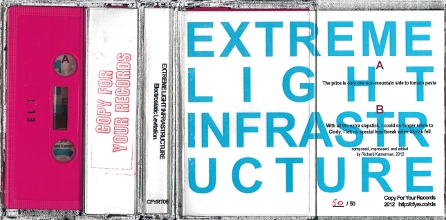
Richard Kamerman extreme light infrastructure electrostatic levitation
classically trained

User avatar
J.F.
Posts: 1074
Joined: Thu May 22, 2008 7:41 am

Re: Now Playing

Post by J.F. »

yonhosago wrote:Apart from the little early works published, I don't know any of that orchestral music from days before 1966; probably is very Nono influenced (Varianti, Il canto sospeso).
Yes please. Two works I really love. Varianti is probably my favorite work of Nono while Nono is probably my favorite composer. So it doesn't get much better than that for me.

It's been a while since I listened to that classical stuff... seeing myself swooning over Nono here, I think I really need to delve into that department again!
. . . .

User avatar
yonhosago
Posts: 972
Joined: Sun May 11, 2008 1:30 pm

Re: Now Playing

Post by yonhosago »

prompted by the all this Lachenmann going Nono exchange

now

Image
classically trained

User avatar
rolandtravy
Posts: 114
Joined: Sat Jul 06, 2013 12:40 pm

Re: Now Playing

Post by rolandtravy »

I was listening to some Nono electronic music some days ago, this was the album....
Image
Here is it.

Gil Sansón
Posts: 143
Joined: Fri Jan 04, 2013 7:32 pm

Re: Now Playing

Post by Gil Sansón »

.....sofferte onde serene... is one of my favorites from mid period Nono, and the whole record is great, a beautiful testament to the friendship of pianist, conductor and composer.

Been playing "Hay que caminar" sonando quite often lately, the Gidon Kremer/Tatiana Gridenko on DG.

User avatar
yonhosago
Posts: 972
Joined: Sun May 11, 2008 1:30 pm

Re: Now Playing

Post by yonhosago »

yes, ...sofferte onde serene... is a beautiful work, a mourning work, just as Como una ola de fuerza y luz.
I don't listen Nono's opus as divided into periods, or if I did, ...sofferte... would be the first work of the third and last period: this period has its proper name with the phrase "No hay caminos hay que caminar soñando"
classically trained

Gil Sansón
Posts: 143
Joined: Fri Jan 04, 2013 7:32 pm

Re: Now Playing

Post by Gil Sansón »

Yes, I too tend to view .....sofferte onde serene... as the piece that somehow starts his later style, though Stille, an Diotima is probably the one that better exemplifies this later period. And yes, I'm a huge fan, with some of the more overtly agitprop works excepting. Don't make much distiction between periods myself, Nono was very consistent throughout his career, with masterpieces aplenty on each decade.

F&B
Posts: 109
Joined: Sat Oct 16, 2010 4:22 am
Location: Denmark

Re: Now Playing

Post by F&B »

Image

Ilsa Gold - Regretten? Rien!

I don't regret... It's a fun compilation. Quite mixed.

User avatar
grisha
home and family entertainment
Posts: 2860
Joined: Sat May 10, 2008 3:46 pm
Location: Israel

Re: Now Playing

Post by grisha »

Gil Sansón wrote:.....sofferte onde serene... is one of my favorites from mid period Nono, and the whole record is great, a beautiful testament to the friendship of pianist, conductor and composer.

Been playing "Hay que caminar" sonando quite often lately, the Gidon Kremer/Tatiana Gridenko on DG.
i think the Ardittis' (Arditti/Alberman) performance of "Hay que caminar" is better (it's also about twice as long).
I was going to be a neo-deconstructivist but mom wouldn't let me.
http://soundcloud.com/mites

User avatar
yonhosago
Posts: 972
Joined: Sun May 11, 2008 1:30 pm

Re: Now Playing

Post by yonhosago »

Gil Sansón wrote:Yes, I too tend to view .....sofferte onde serene... as the piece that somehow starts his later style, though Stille, an Diotima is probably the one that better exemplifies this later period. And yes, I'm a huge fan, with some of the more overtly agitprop works excepting. Don't make much distiction between periods myself, Nono was very consistent throughout his career, with masterpieces aplenty on each decade.
yes, Fragmente is a fantastic piece, one of the few by Nono that I had listened in concert (I think the other two were Ommagio a Gyorgy Kurtág and ...sofferte...): can't remeber the quartet that played it here (in Chile); of course they weren't chilean. The played it with longer and longer silences. Before Fragmente, they played Schoenberg Third Quartet!
For my part, the "last decade" has its peak in Prometeo.
By the way, why the distaste about the "agitprop" works? I always listen an agitprop element in every one of Nono's pieces.

(can say anything about good or not so good versions of Hay que caminar)
classically trained

Gil Sansón
Posts: 143
Joined: Fri Jan 04, 2013 7:32 pm

Re: Now Playing

Post by Gil Sansón »

grisha wrote:
Gil Sansón wrote:.....sofferte onde serene... is one of my favorites from mid period Nono, and the whole record is great, a beautiful testament to the friendship of pianist, conductor and composer.

Been playing "Hay que caminar" sonando quite often lately, the Gidon Kremer/Tatiana Gridenko on DG.
i think the Ardittis' (Arditti/Alberman) performance of "Hay que caminar" is better (it's also about twice as long).
I've been told that, should check it along with the one on Wandelweiser.

No problem with agitprop and indeed there's an element of it in pretty much every one of his pieces, which is why I used the word overtly, to describe those sound collages of the late sixties. I find them to be the less sucessful of all his work. I do like some of them, Contrapunto Dialettico alla Mente is one I still like, it's those works like Musica-Manifesto No. 1 the ones I feel haven't aged that well. It seems to me that Nono was pretty sure about his politics until the late seventies. After that, eve though he remained solidly on the left, he seemed to not have all the answers as he seemed back in the late sixties and perhaps his use of silence (he used the expression silence of others) is a way of giving space to those who remain silent, either because they are forced to remain silent or because they have chosen to remain silent.

Gil Sansón
Posts: 143
Joined: Fri Jan 04, 2013 7:32 pm

Re: Now Playing

Post by Gil Sansón »

Also been listening to that wonderful CD of Il Canto Sospeso/Kindertotenlieder that Abbado made with the Berliner Philarmoniker on Sony. Il Canto Sospeso may well be the greatest work to come out in the fifties, and one that claerly shows how shallow those criticisms about how serial music only engages the (expert) listener on an intellectual level that we keep finding in our way in this day and age.

Nono was also perhaps the only main composer of his generation to have truly understood the possibilities of free improvisation when gathering material for a composition, and the direction to where his last works seem to point is not far from what you actually find on labels like Another Timbre (Roberto Fabricciani was the original player in both tape and premiere of A Pierre, Dell'azzurro Silenzio, Inquietum), so it wouldn't be too wild a guess to imagine that he would have remained relevant today if he was still with us.

User avatar
yonhosago
Posts: 972
Joined: Sun May 11, 2008 1:30 pm

Re: Now Playing

Post by yonhosago »

Gil Sansón wrote:
grisha wrote:
Gil Sansón wrote:.....sofferte onde serene... is one of my favorites from mid period Nono, and the whole record is great, a beautiful testament to the friendship of pianist, conductor and composer.

Been playing "Hay que caminar" sonando quite often lately, the Gidon Kremer/Tatiana Gridenko on DG.
i think the Ardittis' (Arditti/Alberman) performance of "Hay que caminar" is better (it's also about twice as long).
I've been told that, should check it along with the one on Wandelweiser.

No problem with agitprop and indeed there's an element of it in pretty much every one of his pieces, which is why I used the word overtly, to describe those sound collages of the late sixties. I find them to be the less sucessful of all his work. I do like some of them, Contrapunto Dialettico alla Mente is one I still like, it's those works like Musica-Manifesto No. 1 the ones I feel haven't aged that well. It seems to me that Nono was pretty sure about his politics until the late seventies. After that, eve though he remained solidly on the left, he seemed to not have all the answers as he seemed back in the late sixties and perhaps his use of silence (he used the expression silence of others) is a way of giving space to those who remain silent, either because they are forced to remain silent or because they have chosen to remain silent.
Probably everyone "in the Left" were pretty sure up until the late seventies: Nono's crisis was not only a personal affair. For different reasons, from 1973 onwards it was all the way down, defeat, fragmentation, disillution, dismantling for those who were pretty sure about anything in the Left. Nono's work from then on does the same as the films by Chris Marker from the same years (Le fond de l'air est rouge, Sans soleil) for example.
But earlier, in the years you said "he was pretty sure about his politics", many of his own side or field denied that his music had any chance to influencing the workers, or to propel a revolutionary process, or to "raise conscience", because, "workers can't understand tape music". (Mikis Theodorakis said that in a debate with Nono, held here in Chile in 1971).

I think that silence was for Nono, apart from what you rightly say, the field of the possible (that is, of a revolution not yet imagined), of possible listening(s); in some text Deleuze talks about "an impossible ear".
Gil Sansón wrote:Nono was also perhaps the only main composer of his generation to have truly understood the possibilities of free improvisation when gathering material for a composition, and the direction to where his last works seem to point is not far from what you actually find on labels like Another Timbre (Roberto Fabricciani was the original player in both tape and premiere of A Pierre, Dell'azzurro Silenzio, Inquietum), so it wouldn't be too wild a guess to imagine that he would have remained relevant today if he was still with us.
I don't know about "truly understood", but many composers were investigating improvisation (Maderna, Earle Brown, Johannes Fritsch, Erhard Karkoshka [teacher of M. Spahlinger]) and others abandoned composition altogether (Franco Evangelisti of Gruppo di Improvvisazione Nuova Consonanza, was a sort of "role model" to Cardew.)
As for Nono's presence today: I remebered a concert set up by Antoine Beuger in Düsseldorf, in 2012: first ...sofferte onde serene..., second Non consumiamo Marx
classically trained

User avatar
J.F.
Posts: 1074
Joined: Thu May 22, 2008 7:41 am

Re: Now Playing

Post by J.F. »

yonhosago wrote:But earlier, in the years you said "he was pretty sure about his politics", many of his own side or field denied that his music had any chance to influencing the workers, or to propel a revolutionary process, or to "raise conscience", because, "workers can't understand tape music". (Mikis Theodorakis said that in a debate with Nono, held here in Chile in 1971).
Two things come to mind here:

Nono composed one work where he tried to simplify his language and be more approachable (in particular with workers in mind). Or is there even some work devised for workers' choir? Checked the work list but can't pin it down... or maybe he did such a work, saw it's a failure and never included it in his worklist. I remember reading something like that, but am not entirely sure.
edit: Siamo la gioventu del Vietnam (1973) is what I mean here. It remained unpublished.

I also remember reading that Nono tried to set up performances of his music in factories. After hearing one work with "industrial" tape noises (fabbrica illuminata) the workers reportedly said something like the noise they have to deal with on a daily basis is much louder / more painful than what Nono's composition displayed.
. . . .

Gil Sansón
Posts: 143
Joined: Fri Jan 04, 2013 7:32 pm

Re: Now Playing

Post by Gil Sansón »

Wondering if this very engaging thread merits that he gets his own Nono thread, but anyway, I liked to add that to me Nono's stance, very assured regarding his methods and aesthetic, shows the mark of a great man. He was alone on this path (more or less), met with a cold shoulder from the Marxist ortodoxy and its socialist realism paradigm, not to mention the traditional avant garde. To sail alone against this current takes a lot of strength, I have to admire his level of committment to his ideas. Most important, these ideas brought about by his relative isolation gave birth to some great music. Musica Manifesto No 1(non consumiamo Marx) sounds too topical and really it doesn't go beyond its status of historical document. In fact, it shows that cockiness of the left at the time and its unability to self assessment using any line of reasoning outside of Marx and Hegel. It's not just cynicism that makes me want to add to the "we don't consume Marx" the phrase "we worship Marx". Admittedly, I am very critical of Marx and Hegel and tend to oppose to Hegelian and Marxist dogmas a Nietszchean perspective that always make me go beyond the logic of what's being said and intead investigate about what kind of instincts are at play beyond the reasoning (don't want to extend myself on this, as it only tangentially related to music, but I can state that the left is, thankfully, not dependent at all to Marx and Hegel anymore). To have this piece and not, say, La Fabbrica Illuminata as part of a Wandelweiser related program seems inded like a curveball, probably related to Beuger's experience in the Aktionist commune.

Also woth mentioning is the fact that the events of 1968 resonated for far longer in Italy than in other countries. Hindsight is always 20/20 and I'm sure I would have gone drunk with all the slogans and seemingly real possibility of a more just world if I was living in those years. Today, 2014, and living in Venezuela, I can state that a government hell bent on destroying the industrial sector, reliant on imports and militarized beyond control while claiming to be a Marxist revolution to the general aquiescence of the international left proofs that Marxism is a religion, always in the right. The left needs to get rid of Marx as actuality. Marx is a burden, just as Freud is a burden, as Deleuze and Guattari have proven. It's a huge contradiction to claim to be in the vanguard and keep bringing these thinkers who actually offered an exit from Marxist dogma back to the soldier ranks while Marx watches from above, which is what made the left reach a cul de sac. Today in Venezuela the government is by all accounts a savage neoliberal enterprise in which bankers and yes men get all the resources while the working class has become the lumpen that has to put on a red hat and go to a rally to get a bag of goods and some cash. This working class with no formal work (unless you deem worthy of the working class to resort to street vendors is progress for the working class) keeps hoping that "the supreme and eternal commander" Hugo Chavez helps them from the afterlife, where he tenderly watches over all of us in company of Bolivar and Guevara. A whole country turn to shreds in the name of a hollow word like socialism (not sayin it was hollow fifty years ago, but it truly is today, especially in Latin America) If the term socialism can be mistaken for what's happening today in Venezuela, then clearly this term has become useless.