
L'écoute du silence : autour du collectif Wandelweiser
Jeudi 26 avril 2012
Centre de documentation de la musique contemporaine
16 place de la Fontaine aux Lions 75019 PARIS
. 15h : introduction – Tom Johnson
À la suite d’une lecture d’une série d’aphorismes de Walter Marchetti issus de son livre De Musicorum Infelicitate, le compositeur Tom Johnson rappellera sa rencontre avec le collectif de compositeurs Wandelweiser, resituera leur recherche dans le paysage de la création contemporaine et présentera plus particulièrement le travail d’Antoine Beuger et Jürg Frey.
. 15h20 : Les qualités du silence. Sur quelques pièces de Wandelweiser – Matthieu Saladin
Le silence représente en musique un paramètre sans qualité par excellence. À la différence des notes ou des sons, le silence n’aurait en effet ni hauteur, ni timbre, ni dynamique, se dénotant par sa seule durée. Dans l’oeuvre de John Cage pourtant, le silence devient rumeur, se parant de qualités qui lui étaient jusqu’alors refusées, du moins les questionnant jusque dans son mutisme apparent. À travers l’étude de différentes pièces du collectif de compositeurs Wandelweiser, cette conférence tâchera de reconsidérer les lignes de fuite possibles à une pensée du silence post-4’33’’, ses enjeux et ses modalités dans la création.
. 16h40 :
Wen (extrait) de Jürg Frey,
Harmony Series (extrait) de Michael Pisaro,
Petits préludes pour la guitare (extrait) d’Antoine Beuger
– pièces interprétées par Dedalus
Cyprien Busolini, alto ; Didier Aschour, guitare ; Thierry Madiot, trombone ; Stéphane Garin, percussion.
. 17h00 : Il aurait pu être – Antoine Beuger
Est-ce que la musique a lieu ? Quel est son mode d’existence ? Dans quel temps la musique s’inscrit-elle ? Dans cette intervention, le compositeur Antoine Beuger livrera quelques brèves réflexions autour de 4’33” (1952) et sur la musique comme commémoration de l’évènement.
. 17h40 : Vague musique, vague silence – Antoine Beuger et Jürg Frey
Conférence sur Canones incerti, une composition de Jürg Frey, sur l’architecture et la légèreté, avec Antoine Beuger, flûte et Jürg Frey, clarinette.
http://www.cdmc.asso.fr/fr/actualites/c ... ndelweiser
wandelweiser
-
Jacques Oger
- Posts: 332
- Joined: Wed May 14, 2008 2:19 am
- Location: Paris
- Contact:
Re: wandelweiser
http://www.potlatch.fr" onclick= "window.open(this.href);return false;

Re: wandelweiser
About Craig Shepard's On foot: Brooklyn
http://www.thirteen.org/metrofocus/cult ... n-on-foot/
http://www.thirteen.org/metrofocus/cult ... n-on-foot/
classically trained
-
Dan Warburton
- Posts: 7920
- Joined: Sun May 11, 2008 12:42 am
Re: wandelweiser
I see they just had a surprise visit from the inspectors and had to close tonight (do you know why, Jacques?) - hope they'll be back in business in time for the Wandelweiser show.. or Antoine & the crew will be takin' it to the streets!Jacques Oger wrote:On 27 and 28 april: Wandelweiser is invited at Les Instants Chavirés
compositions by Antoine Beuger, Michael Pisaro, Radu Malfatti, Jürg Frey.
will be performed by members of Dedalus : Thierry Madiot, Cyprien Busolini, Didier Aschour and Stéphane Garin, + Antoine Beuger and Jürg Frey.
http://www.paristransatlantic.com
REISSUED! Eric La Casa / Jean-Luc Guionnet / Dan Warburton METRO PRE SAINT GERVAIS
https://swarming.bandcamp.com/album/met ... nt-gervais
REISSUED! Eric La Casa / Jean-Luc Guionnet / Dan Warburton METRO PRE SAINT GERVAIS
https://swarming.bandcamp.com/album/met ... nt-gervais
-
Jacques Oger
- Posts: 332
- Joined: Wed May 14, 2008 2:19 am
- Location: Paris
- Contact:
Re: wandelweiser
I'm just coming back to Paris right now after 4 days without Internet. I have no direct info.Dan Warburton wrote:I see they just had a surprise visit from the inspectors and had to close tonight (do you know why, Jacques?) - hope they'll be back in business in time for the Wandelweiser show.. or Antoine & the crew will be takin' it to the streets!Jacques Oger wrote:On 27 and 28 april: Wandelweiser is invited at Les Instants Chavirés
compositions by Antoine Beuger, Michael Pisaro, Radu Malfatti, Jürg Frey.
will be performed by members of Dedalus : Thierry Madiot, Cyprien Busolini, Didier Aschour and Stéphane Garin, + Antoine Beuger and Jürg Frey.
http://www.potlatch.fr" onclick= "window.open(this.href);return false;

-
Jacques Oger
- Posts: 332
- Joined: Wed May 14, 2008 2:19 am
- Location: Paris
- Contact:
Re: wandelweiser
Yesterday night : 1st Wandelweiser concert at Les Instants Chavirés with :
Ensemble DEDALUS
Cyprien Busolini, alto ; Didier Aschour, guitar ; Thierry Madiot, trombone ; Stéphane Garin, percussion ; Antoine Beuger, flûte ; Jürg Frey, clarinet
pieces performed :
-Radu Malfatti darenootodesuka (36')
-Antoine Beuger Lieux de passage (25')
-Jürg Frey Canones Incerti (25')
-Michael Pisaro asleep, river, bells, chords (34')
It was the first Wandelweiser concert in Paris ever.
The concert didn't take place in the usual IC venue which is temporarily closed due to some issues with the fire alarm system. (fyi it should reopen very soon).
So the musicians had to perform in another place - called Ancienne Brasserie Bouchoule - which is a kind of disused factory/warehouse and is now used as an exhibition space by IC.
First, it's important to know that this space is rather huge, much bigger thant the IC venue anyway. There is no soundproofing against the outside noise. And this place is located close to big streets with quite important car traffic, and people talking around on the sidewalks and the surrounding cafés.
So in these conditions, the concert promised to be a great one.
I am just trying to give you a quick report, which is something I am not used to, and seems rather impossible to do. I try to give you which seems to me the most important, and I am sure that I forget to mention many other things.
Each performed piece was different from each other.
The first thing important to report is that the musicians always played very slowly and at a very very very low volume (all the pieces). It was immediately amazing when they started with the Malfatti piece.
Of course we could hear the outside noises : cars, motorbikes, horns, people… Actually these noises were louder than the musicians' sounds themselves.
So, in a way, the relationship between the music and these sounds were quite interesting to feel/understand/analyse. As if there was a reversal between the usual status of each of them. Thus, we could happily consider the city noises being more "important" (higher in volume) than the music itself which could appear as a rumour in these conditions.
During the whole concert, it was something continuous, as an extension of the 4'33 experience. The music which was performed became an integral part of the global environment, with no separations between "inside" and "outside". And, depending on the moments, the listener could only focus on the tiny sounds of the musicians. Or at other moments, on the 'outside music'. Very fascinating indeed!
Of course, there were many unpredicted events (kind of "accidents") during the whole performance which are important to report too.
During the first piece, there was a continuous sporadic noise. At first it seemed to be something coming from the wooden framework or the roof. But in fact it was a noise coming from a neon light tube. Actually, this sound was rather unbearable for everybody and for the musicians too. But all of us had to deal with that. This neon tube was switched off durin the three following pieces. During the same first piece, there was also a buzz ( a couple of seconds) coming from the guitar amp due to a bad switch of a jack. We all saw that Didier was very upset by that, as it never happens usually…
During the second piece, after maybe 10 minutes, there was a very strong fire alarm sound coming from the surrounding buildings ! I saw that Antoine was smiling a bit, but he was immediatly unsettled by that. During a couple of seconds, he was hesitating to keep on playing or not… But the other musicians kept on concentrating on the scores. But the fire alarm was going on. Very intrusive ! The problem was : how long should it last ? So at a moment Didier spoke and said 'it's better to wait it to stop. A few seconds after the fire alarm stopped and they started again to play the piece. At the end there was a slight rain on the roof.
No 'incident' during the 3rd piece. Some rain at moments too.
And in the 4th piece (Pisaro), there was a diffusion of prerecorded sounds of the same empty inside place recorded the afternoon before. And the musicians had to play over it as if they wanted to "give colours" (according to Didier's words) to this kind of field recording. It was an interesting 'mise en abîme' situation. But another incident again: at a moment (due to a bad switch) there were several interruptions of the field recording diffusion… Stephan (vibraphonist) couldn't prevent to burst out laughing, but he did it at a very low volume ! And Didier was smiling too… It seemed that the equipment wanted to participate to the concert
Great concert !
And I have to mention that all the musicians were excellent performers! When I talked with them afterwards, they said that performing these pieces continuously at such low volumes was very demanding in terms of energy and attention to focus on all sound events…
Thanks to the musicians to the Instants Chavirés and Tom Johnson for organizing this concert !
Ensemble DEDALUS
Cyprien Busolini, alto ; Didier Aschour, guitar ; Thierry Madiot, trombone ; Stéphane Garin, percussion ; Antoine Beuger, flûte ; Jürg Frey, clarinet
pieces performed :
-Radu Malfatti darenootodesuka (36')
-Antoine Beuger Lieux de passage (25')
-Jürg Frey Canones Incerti (25')
-Michael Pisaro asleep, river, bells, chords (34')
It was the first Wandelweiser concert in Paris ever.
The concert didn't take place in the usual IC venue which is temporarily closed due to some issues with the fire alarm system. (fyi it should reopen very soon).
So the musicians had to perform in another place - called Ancienne Brasserie Bouchoule - which is a kind of disused factory/warehouse and is now used as an exhibition space by IC.
First, it's important to know that this space is rather huge, much bigger thant the IC venue anyway. There is no soundproofing against the outside noise. And this place is located close to big streets with quite important car traffic, and people talking around on the sidewalks and the surrounding cafés.
So in these conditions, the concert promised to be a great one.
I am just trying to give you a quick report, which is something I am not used to, and seems rather impossible to do. I try to give you which seems to me the most important, and I am sure that I forget to mention many other things.
Each performed piece was different from each other.
The first thing important to report is that the musicians always played very slowly and at a very very very low volume (all the pieces). It was immediately amazing when they started with the Malfatti piece.
Of course we could hear the outside noises : cars, motorbikes, horns, people… Actually these noises were louder than the musicians' sounds themselves.
So, in a way, the relationship between the music and these sounds were quite interesting to feel/understand/analyse. As if there was a reversal between the usual status of each of them. Thus, we could happily consider the city noises being more "important" (higher in volume) than the music itself which could appear as a rumour in these conditions.
During the whole concert, it was something continuous, as an extension of the 4'33 experience. The music which was performed became an integral part of the global environment, with no separations between "inside" and "outside". And, depending on the moments, the listener could only focus on the tiny sounds of the musicians. Or at other moments, on the 'outside music'. Very fascinating indeed!
Of course, there were many unpredicted events (kind of "accidents") during the whole performance which are important to report too.
During the first piece, there was a continuous sporadic noise. At first it seemed to be something coming from the wooden framework or the roof. But in fact it was a noise coming from a neon light tube. Actually, this sound was rather unbearable for everybody and for the musicians too. But all of us had to deal with that. This neon tube was switched off durin the three following pieces. During the same first piece, there was also a buzz ( a couple of seconds) coming from the guitar amp due to a bad switch of a jack. We all saw that Didier was very upset by that, as it never happens usually…
During the second piece, after maybe 10 minutes, there was a very strong fire alarm sound coming from the surrounding buildings ! I saw that Antoine was smiling a bit, but he was immediatly unsettled by that. During a couple of seconds, he was hesitating to keep on playing or not… But the other musicians kept on concentrating on the scores. But the fire alarm was going on. Very intrusive ! The problem was : how long should it last ? So at a moment Didier spoke and said 'it's better to wait it to stop. A few seconds after the fire alarm stopped and they started again to play the piece. At the end there was a slight rain on the roof.
No 'incident' during the 3rd piece. Some rain at moments too.
And in the 4th piece (Pisaro), there was a diffusion of prerecorded sounds of the same empty inside place recorded the afternoon before. And the musicians had to play over it as if they wanted to "give colours" (according to Didier's words) to this kind of field recording. It was an interesting 'mise en abîme' situation. But another incident again: at a moment (due to a bad switch) there were several interruptions of the field recording diffusion… Stephan (vibraphonist) couldn't prevent to burst out laughing, but he did it at a very low volume ! And Didier was smiling too… It seemed that the equipment wanted to participate to the concert
Great concert !
And I have to mention that all the musicians were excellent performers! When I talked with them afterwards, they said that performing these pieces continuously at such low volumes was very demanding in terms of energy and attention to focus on all sound events…
Thanks to the musicians to the Instants Chavirés and Tom Johnson for organizing this concert !
http://www.potlatch.fr" onclick= "window.open(this.href);return false;
Re: wandelweiser
wow, thanks for the account, jacques, undoubtedly the longest skein of english i've seen from you yet!
http://crowwithnomouth.wordpress.com/
Experimental music should be something that suggests a way of organizing your thinking, your attitude toward the world, which suggests that the world could be different.
Christian Wolff 2014
Experimental music should be something that suggests a way of organizing your thinking, your attitude toward the world, which suggests that the world could be different.
Christian Wolff 2014
-
Dan Warburton
- Posts: 7920
- Joined: Sun May 11, 2008 12:42 am
Re: wandelweiser
So fire alarms and people chattering don't bother you in a Wandelweiser concert but they do in a quiet improv set, Jacques?
Thanks for the write-up, and good luck in the Bois de Vincennes this afternoon. I hope you like the sound of the beating down on your umbrella.
Thanks for the write-up, and good luck in the Bois de Vincennes this afternoon. I hope you like the sound of the beating down on your umbrella.
http://www.paristransatlantic.com
REISSUED! Eric La Casa / Jean-Luc Guionnet / Dan Warburton METRO PRE SAINT GERVAIS
https://swarming.bandcamp.com/album/met ... nt-gervais
REISSUED! Eric La Casa / Jean-Luc Guionnet / Dan Warburton METRO PRE SAINT GERVAIS
https://swarming.bandcamp.com/album/met ... nt-gervais
-
Jacques Oger
- Posts: 332
- Joined: Wed May 14, 2008 2:19 am
- Location: Paris
- Contact:
Re: wandelweiser
Yes I'm surprising myself too.Jesse wrote:wow, thanks for the account, jacques, undoubtedly the longest skein of english i've seen from you yet!
http://www.potlatch.fr" onclick= "window.open(this.href);return false;
-
Jacques Oger
- Posts: 332
- Joined: Wed May 14, 2008 2:19 am
- Location: Paris
- Contact:
Re: wandelweiser
I make a great difference between people from the attendance making unrespectful noises with their chairs or coughing and disturbing the concentration of other people, and noises coming from the surroundings (including the fridge at the bar). As I wrote, in Wandelweiser music, there are several plans (often). The music itself and the environment. What is the more 'present' ? It depends on moments, on your concentration, on the movements of your brain. Sometimes the music itself is the rumour. But I agree with you, it can be the same in some improv sets too, I don't see why it couldn't be so.Dan Warburton wrote:So fire alarms and people chattering don't bother you in a Wandelweiser concert but they do in a quiet improv set, Jacques?
Thanks for the write-up, and good luck in the Bois de Vincennes this afternoon. I hope you like the sound of the beating down on your umbrella.
http://www.potlatch.fr" onclick= "window.open(this.href);return false;
-
Dan Warburton
- Posts: 7920
- Joined: Sun May 11, 2008 12:42 am
Re: wandelweiser
So Jacques how was the concert in the park? Did you go?
http://www.paristransatlantic.com
REISSUED! Eric La Casa / Jean-Luc Guionnet / Dan Warburton METRO PRE SAINT GERVAIS
https://swarming.bandcamp.com/album/met ... nt-gervais
REISSUED! Eric La Casa / Jean-Luc Guionnet / Dan Warburton METRO PRE SAINT GERVAIS
https://swarming.bandcamp.com/album/met ... nt-gervais

Re: wandelweiser
so this is quietly (sic!) out on Wind Measure:

Manfred Werder
"2005/1"
Jason Kahn: actualization & recording
Winds Measure Recordings wm28
8 cdr set, fold out sleeve
1 color letterpress sleeve,
conversation insert and score card
http://windsmeasurerecordings.net
Zürich Hauptbahnhof, March 1 - 31, 2010, each day at 10 am.
on Jason Kahn's site there is a nice correspondance between Kahn & Werder:
Some notes about "2005(1) - ort / zeit / (klänge)"
Jason: Shortly before seeing your performance of "2005(1) - ort / zeit / (klänge)" from September 1-30, 2009 on the shores of the Limmat River in Züruch I'd just finished a realization of Michael Pisaro's composition "Only [harmony series no. 17]", which, besides asking for the performer to sit quietly and listen, also specified "A few times, playing an extremely long, very quiet tone." Your piece seemed to take the sitting quietly and listening to another level (although you were standing), in that there seemed to be not just an "intake" of sound and situation going on but also a projection, an insertion of your presence into the space (the shores of the Limmat River). As a performance I found this fascinating and at the time I didn't know anything about the score. I was interested in the aspect of your presence, of you standing on this one spot by the river as a performance of a score. Aside from enjoying the experience of partaking in your experience of standing by the river listening, of being there, I began to ask myself, "how could one realize a piece like this in the context of a documentation, i.e. of a recording?"
I liked the idea of contrasting this, what in my opinion was, very radical approach to a performance (for whom? for the composer, for the space, for anyone who happened to walk by, not knowing this was a performance, maybe just seeing this as a man standing by the river looking / listening, "being there," attentively?) with the very classical, time-worn practice of recording a composition. How would this translate to the listener? And what would be my experience if I were to "interpret" this piece, not as a performer as much as an "instrumentalist" (a recordist), yet in fact by default playing the same role as you by the river: a person standing at a particular location somewhere over one month's time, to all passersby as someone perhaps not noticed at all, perhaps only slightly obvious as someone more still, more attentive than the average person relaxing or waiting somewhere. After thinking about this for a while I decided to ask you for the score and see about realizing the piece.
I guess my first question is, how did you feel about someone recording this composition? I would almost say it is a contradiction in the conceptual precepts of this piece to have it performed or, even further, to have the performance recorded.
Manfred: When working on a score, I usually don't think of possible performances. The score and the performance seem to have two different reaches, each with its own potentials. So, when working on "2005(1) - ort / zeit / (klänge) -," I actually dealt with some compositional questions which had appeared at that time; for instance, how could I work the performance space in the score - the performance space which had become so important, so present by the mere fact of a certain absence of produced sounds by the performers?
To a certain extent I wanted to mark in the score that which emerges through the absence of produced sounds (instead of keeping on structuring a few sounds to be if at all performed).
And, I was looking for something like a "structural matter of fact" rather than a "prescription for action." Something that could be just there and occurring regardless of any performance approach.
Already before, I had replaced a term like "performance" by "realization" or "actualization." I thought that a word like "performance" would restrict our ideas of a practice of working on sound, by still referring to an object to produce which however had meanwhile become such a thing like the alteration of a given atmosphere. A word like "actualization" would allude more to a practice of working on situations that are occurring to some extent by themselves, and where the "performer" finds herself intrinsically as part of a situation (and not as its creator).
So, regarding your question, I'm definitely interested in challenging our notions of both the score, and a practice of performance which today includes that of recording, and your beautiful project with this piece allows us to reflect and ponder our complex role as performers and recordists.
Jason: In a sense, I'm wondering now, despite the fact that you are a composer (defining this term as "a person who organizes sound"), how much this piece actually has to do with sound per se. Rather, perhaps this piece is more about creating a situation for focused perception of a space, a place, a situation encompassing all of this, including sound, light, smell, temperature and so.
Standing in Zürich's main train station roughly thirty minutes every day for a month, I realized within the first few days that this piece was about much more than the sound of the train station, the sound I was recording and documenting as a realization of this piece. I felt in a sense that I was focusing less at times on the environment around me than on how I was perceiving this environment, the perception of my perception, as it were. This, of course, gradually cast into doubt my idea of somehow documenting a realization of the piece (sound recording), thinking that perhaps this piece was beyond documentation, was purely about the experience of me being in a place for a certain period of time; and of others (an "audience" come to watch me "perform") sharing this time and space with me, experiencing this situation in their way (which, I know, is in fact not any different than a traditional musical performance). In the end, I settled with the idea of the sound recording as a means of documenting several aspects of the piece: the sound experienced, the action of "being there," a sense of the time passing. Which brings us back to your statement that "The score and the performance seem to have two different reaches, each with its own potentials." And with time I began to realize this was one of the beauties of this piece, that only with the time of being there in the "performance space" did the various reaches of the composition manifest themselves.
I know that, as you said here, you are "interested in challenging our notions of both the score, and a practice of performance" but beyond this, when you are performing this piece what is your focus, how do you feel yourself in relation to the space and its identity as a place (as defined by its sound, its light, its presence)? How did the reaches of this piece reveal themselves to you?
Manfred: Maybe we can say that all music is about much more than just the sounds per se because producing sounds has always been a way of locating and confirming one's existence in a world that is infinitely sounding. I prefer your description of an "intake of sound and situation," and at the same time a "projection, an insertion of the performer's presence into the space" that is happening, rather than the idea of a focused perception which still seems to relate more to a subject - object structure which maybe has been at the "beginning" of a long and very problematic history.
I don't like so much a certain kind of exploratory spirit because, it usually takes up a space and destroys the place for its personal purposes. Each place is intrinsic multiplicity and doesn't need any intervention of ours. So, I try to approach a place regarding a performance almost unnoticeably, unimposingly.
I think when performing I'm looking for a situation where for a certain time something like "the world" would appear. Not one to look at or listen to. Not one to project concepts onto. One to be part of, where in a chaotic and infinite becoming something like a real sense of meeting and sharing would emerge. I remember having been so overwhelmed and moved by the mere fact of finding myself in this great abundance of life on the shores of the Limmat River. I love Deleuze's call for "giving consistency without losing anything of infinity (donner consistance sans rien perdre de l'infini)," it's such a beautiful statement, and I read here your sentence "thinking that perhaps this piece was purely about the experience of me being in a place for a certain period of time" as a way of working on such a consistency.
How can we think our practice of producing sounds so as to touch upon an idea or sense of an infinite situation? I'm roaming the cities regarding possible places for projects, and revisit places to ponder their potentials. When performing I'm not so much interested in discovering certain identities of a place, but more in sensing that I actually interact in its infinity.
Regarding your question of how the reaches of this piece might reveal themselves to me, I would say, very personally, in the way the ongoing practice of private and public realizations of this score has heightened and transformed my experience and sense of the surroundings. This has been so enriching, and subsequently has deeply informed my later scores.
You have anticipated some possible reservations towards documenting such a project. I would say our practice of producing sounds has of course changed, and so have our ideas of interpretation and documentation. Almost paradoxically we could add that an existing documentation retains its potential in that what is not and cannot be documented.
Manfred Werder
"2005/1"
Jason Kahn: actualization & recording
Winds Measure Recordings wm28
8 cdr set, fold out sleeve
1 color letterpress sleeve,
conversation insert and score card
http://windsmeasurerecordings.net
Zürich Hauptbahnhof, March 1 - 31, 2010, each day at 10 am.
on Jason Kahn's site there is a nice correspondance between Kahn & Werder:
Some notes about "2005(1) - ort / zeit / (klänge)"
Jason: Shortly before seeing your performance of "2005(1) - ort / zeit / (klänge)" from September 1-30, 2009 on the shores of the Limmat River in Züruch I'd just finished a realization of Michael Pisaro's composition "Only [harmony series no. 17]", which, besides asking for the performer to sit quietly and listen, also specified "A few times, playing an extremely long, very quiet tone." Your piece seemed to take the sitting quietly and listening to another level (although you were standing), in that there seemed to be not just an "intake" of sound and situation going on but also a projection, an insertion of your presence into the space (the shores of the Limmat River). As a performance I found this fascinating and at the time I didn't know anything about the score. I was interested in the aspect of your presence, of you standing on this one spot by the river as a performance of a score. Aside from enjoying the experience of partaking in your experience of standing by the river listening, of being there, I began to ask myself, "how could one realize a piece like this in the context of a documentation, i.e. of a recording?"
I liked the idea of contrasting this, what in my opinion was, very radical approach to a performance (for whom? for the composer, for the space, for anyone who happened to walk by, not knowing this was a performance, maybe just seeing this as a man standing by the river looking / listening, "being there," attentively?) with the very classical, time-worn practice of recording a composition. How would this translate to the listener? And what would be my experience if I were to "interpret" this piece, not as a performer as much as an "instrumentalist" (a recordist), yet in fact by default playing the same role as you by the river: a person standing at a particular location somewhere over one month's time, to all passersby as someone perhaps not noticed at all, perhaps only slightly obvious as someone more still, more attentive than the average person relaxing or waiting somewhere. After thinking about this for a while I decided to ask you for the score and see about realizing the piece.
I guess my first question is, how did you feel about someone recording this composition? I would almost say it is a contradiction in the conceptual precepts of this piece to have it performed or, even further, to have the performance recorded.
Manfred: When working on a score, I usually don't think of possible performances. The score and the performance seem to have two different reaches, each with its own potentials. So, when working on "2005(1) - ort / zeit / (klänge) -," I actually dealt with some compositional questions which had appeared at that time; for instance, how could I work the performance space in the score - the performance space which had become so important, so present by the mere fact of a certain absence of produced sounds by the performers?
To a certain extent I wanted to mark in the score that which emerges through the absence of produced sounds (instead of keeping on structuring a few sounds to be if at all performed).
And, I was looking for something like a "structural matter of fact" rather than a "prescription for action." Something that could be just there and occurring regardless of any performance approach.
Already before, I had replaced a term like "performance" by "realization" or "actualization." I thought that a word like "performance" would restrict our ideas of a practice of working on sound, by still referring to an object to produce which however had meanwhile become such a thing like the alteration of a given atmosphere. A word like "actualization" would allude more to a practice of working on situations that are occurring to some extent by themselves, and where the "performer" finds herself intrinsically as part of a situation (and not as its creator).
So, regarding your question, I'm definitely interested in challenging our notions of both the score, and a practice of performance which today includes that of recording, and your beautiful project with this piece allows us to reflect and ponder our complex role as performers and recordists.
Jason: In a sense, I'm wondering now, despite the fact that you are a composer (defining this term as "a person who organizes sound"), how much this piece actually has to do with sound per se. Rather, perhaps this piece is more about creating a situation for focused perception of a space, a place, a situation encompassing all of this, including sound, light, smell, temperature and so.
Standing in Zürich's main train station roughly thirty minutes every day for a month, I realized within the first few days that this piece was about much more than the sound of the train station, the sound I was recording and documenting as a realization of this piece. I felt in a sense that I was focusing less at times on the environment around me than on how I was perceiving this environment, the perception of my perception, as it were. This, of course, gradually cast into doubt my idea of somehow documenting a realization of the piece (sound recording), thinking that perhaps this piece was beyond documentation, was purely about the experience of me being in a place for a certain period of time; and of others (an "audience" come to watch me "perform") sharing this time and space with me, experiencing this situation in their way (which, I know, is in fact not any different than a traditional musical performance). In the end, I settled with the idea of the sound recording as a means of documenting several aspects of the piece: the sound experienced, the action of "being there," a sense of the time passing. Which brings us back to your statement that "The score and the performance seem to have two different reaches, each with its own potentials." And with time I began to realize this was one of the beauties of this piece, that only with the time of being there in the "performance space" did the various reaches of the composition manifest themselves.
I know that, as you said here, you are "interested in challenging our notions of both the score, and a practice of performance" but beyond this, when you are performing this piece what is your focus, how do you feel yourself in relation to the space and its identity as a place (as defined by its sound, its light, its presence)? How did the reaches of this piece reveal themselves to you?
Manfred: Maybe we can say that all music is about much more than just the sounds per se because producing sounds has always been a way of locating and confirming one's existence in a world that is infinitely sounding. I prefer your description of an "intake of sound and situation," and at the same time a "projection, an insertion of the performer's presence into the space" that is happening, rather than the idea of a focused perception which still seems to relate more to a subject - object structure which maybe has been at the "beginning" of a long and very problematic history.
I don't like so much a certain kind of exploratory spirit because, it usually takes up a space and destroys the place for its personal purposes. Each place is intrinsic multiplicity and doesn't need any intervention of ours. So, I try to approach a place regarding a performance almost unnoticeably, unimposingly.
I think when performing I'm looking for a situation where for a certain time something like "the world" would appear. Not one to look at or listen to. Not one to project concepts onto. One to be part of, where in a chaotic and infinite becoming something like a real sense of meeting and sharing would emerge. I remember having been so overwhelmed and moved by the mere fact of finding myself in this great abundance of life on the shores of the Limmat River. I love Deleuze's call for "giving consistency without losing anything of infinity (donner consistance sans rien perdre de l'infini)," it's such a beautiful statement, and I read here your sentence "thinking that perhaps this piece was purely about the experience of me being in a place for a certain period of time" as a way of working on such a consistency.
How can we think our practice of producing sounds so as to touch upon an idea or sense of an infinite situation? I'm roaming the cities regarding possible places for projects, and revisit places to ponder their potentials. When performing I'm not so much interested in discovering certain identities of a place, but more in sensing that I actually interact in its infinity.
Regarding your question of how the reaches of this piece might reveal themselves to me, I would say, very personally, in the way the ongoing practice of private and public realizations of this score has heightened and transformed my experience and sense of the surroundings. This has been so enriching, and subsequently has deeply informed my later scores.
You have anticipated some possible reservations towards documenting such a project. I would say our practice of producing sounds has of course changed, and so have our ideas of interpretation and documentation. Almost paradoxically we could add that an existing documentation retains its potential in that what is not and cannot be documented.
Re: wandelweiser
i guess the first batch of 30 is already sold out, but ben is working on a second batch.
m
m
-
Jacques Oger
- Posts: 332
- Joined: Wed May 14, 2008 2:19 am
- Location: Paris
- Contact:
Re: wandelweiser
it was nice. Fortunately weather was ok.Dan Warburton wrote:So Jacques how was the concert in the park? Did you go?
The event took place in a clearing, close to the Monument inachevé à Beethoven, in Bois de Vincennes. (picture here : http://nouvellefeuille.canalblog.com/ar ... 92527.html )
They performed a lot of pieces (maybe 8) in different parts of this clearing , including Stones which was played almost continuously. I mean that when they had ended a piece, they came back and sat down on a trunk to keep on performing Stones.
It was very quiet and it lasted 3 hours.
About 8 performers including Tom Johnson, Antoine Beuger and Jurg Frey.
And 12 people attending. We were authorized to perform 'Stones' with them. What I did by moments when Tom Johnson was regularly hitting the trunk with a stick. I understood he was counting in his head... of course! So I tried to make kind of something in rhythm with him by hitting two stones. I saw him smiling...
Antoine Beuger and Jurg Frey were amazing. When they were performing Stones, Antoine had two small bowls. One was half filled with pebbles. He was delicately taking pebbles one by one and putting them in the other bowl trying to make no sound when doing that. Then he was slowly bending the bowl aside in a way some pebbles could slip lightly. Then, when all the pebbles positions had changed, he started again to put them one by one in the first bowl. Maybe he did that two hours long (with some interruptions to play other pieces)! At the same moment, Jurg Frey was launching small pebbles on a stone located on the ground at one meter in front of him. I can say he was very skilled ! Fascinating!
Often this performance reminded me of what often did the french group Topophonie in 2000/2003 with musicians like Pascal Battus, Jean-Luc Guionnet, Carole Rieussec, Sophie Agnel, Hélène Breschand, Théo Jarrier, Thierry Madiot, Sharif Sehnaoui, Li-Ping Ting, Stéphane Rives, Isabelle Duthoit, Seijiro Murayama, Yukiko Nakamura etc.
link about Topophoie here : http://topophonie.free.fr/plan.php3
http://www.potlatch.fr" onclick= "window.open(this.href);return false;
Re: wandelweiser
Here is Richard Pinnell's write up on the recent Stones perfomance in London (w Partick Farmer using pebbles, shoe and wooden box in a similar manner as Antoine):
http://www.thewatchfulear.com/?p=7136
The perfomance i saw in London at ICA by Wandelweiser Ensemble was excellent.
and here is a picture of only Shitenia perfomance of Stones w pebbles again:
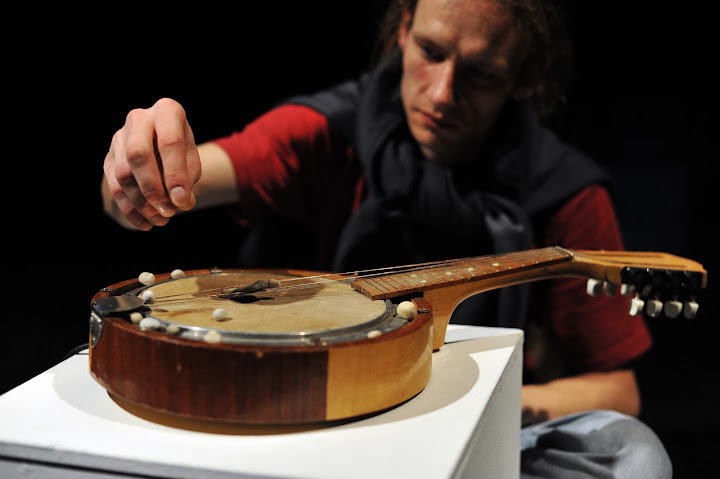
http://www.thewatchfulear.com/?p=7136
The perfomance i saw in London at ICA by Wandelweiser Ensemble was excellent.
and here is a picture of only Shitenia perfomance of Stones w pebbles again:
-
Dan Warburton
- Posts: 7920
- Joined: Sun May 11, 2008 12:42 am
Re: wandelweiser
Is Wolff a Wandelweiser now?
http://www.paristransatlantic.com
REISSUED! Eric La Casa / Jean-Luc Guionnet / Dan Warburton METRO PRE SAINT GERVAIS
https://swarming.bandcamp.com/album/met ... nt-gervais
REISSUED! Eric La Casa / Jean-Luc Guionnet / Dan Warburton METRO PRE SAINT GERVAIS
https://swarming.bandcamp.com/album/met ... nt-gervais
Re: wandelweiser
http://soundcloud.com/johnnychchang/stefan-thut-vier
Stefan Thut: Vier
Lucio Capece - bass clarinet
Johnny Chang - violin
Hannes Lingens - accordion
Koen Nutters - bass
18.02.12 Live @ Ausland, Umlaut Festival (Berlin-Prenzlauer Berg)
Stefan Thut: Vier
Lucio Capece - bass clarinet
Johnny Chang - violin
Hannes Lingens - accordion
Koen Nutters - bass
18.02.12 Live @ Ausland, Umlaut Festival (Berlin-Prenzlauer Berg)
Re: wandelweiser
I don't know if this was already posted but on The Wulf site you have amedia sections with a lot of recordings from the place and most of them are there for free download. From the wandelgang you have some pieces by Jürg Frey, Michael Pisaro, Stefan Thut, Manfred Werder, Taylam Susan, Mark So, Sam Sfirri .... but also there are pieces by Catherine Lamb, Julia Holter, Christian Kesten, Johnny Chang, Laurence Crane, Taku Sugimoto, John Lely, Marc Sabat, Ulrich Krieger, ... .... and of course music by Cage, Tenney, Wollf, Brown, Polansky, Grisey, Nono, Feldman, etc ... and even some improvs by the likes of Bonnie Jones & David Kendall & a quartet by Ulrich Krieger, Mark Trayle, Andrea Neumann, Sabine Ercklentz ... enjoy
http://www.thewulf.org/media.html
http://www.thewulf.org/media.html
Re: wandelweiser
excellent! thanks a lot.lukaz wrote:I don't know if this was already posted but on The Wulf site you have amedia sections with a lot of recordings from the place and most of them are there for free download. From the wandelgang you have some pieces by Jürg Frey, Michael Pisaro, Stefan Thut, Manfred Werder, Taylam Susan, Mark So, Sam Sfirri .... but also there are pieces by Catherine Lamb, Julia Holter, Christian Kesten, Johnny Chang, Laurence Crane, Taku Sugimoto, John Lely, Marc Sabat, Ulrich Krieger, ... .... and of course music by Cage, Tenney, Wollf, Brown, Polansky, Grisey, Nono, Feldman, etc ... and even some improvs by the likes of Bonnie Jones & David Kendall & a quartet by Ulrich Krieger, Mark Trayle, Andrea Neumann, Sabine Ercklentz ... enjoy
http://www.thewulf.org/media.html

Re: wandelweiser
really good piece by Marc Medwin on Antoine Beuger and Wandelweiser:
http://www.musicweb-international.com/c ... weiser.htm
http://www.musicweb-international.com/c ... weiser.htm