Love this very much
It is currently Fri Oct 16, 2026 7:25 pm




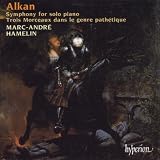
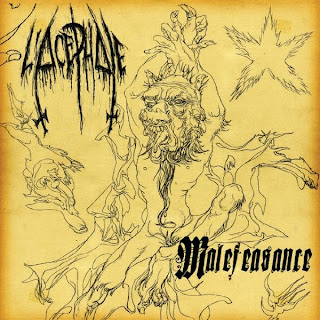
How nice that they used the same image as this cover:926am wrote:
Alkan symphony for solo piano
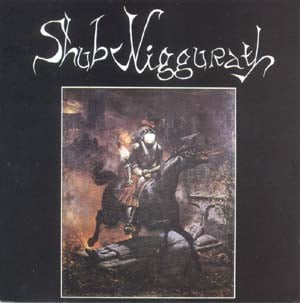

it's a 4-lp set from the early 70's of some germans performing pieces and some interviews with the composers. Credo In Us was famously(?) sampled by NWW on one of their early (not that great) albums. the performances are pretty "traditional" for the time period (i'm not a big classical music guy but it seems that a lot of orchestral avant-garde stuff from that time sounds the same, even when dealing with scores like Four Systems and Sapporo) but i have good feelings toward the record in general.simon reynell wrote:^ ^ ^ ^ ^
intrigued by this. Can you tell more about what it is, Yonsonago?
If LG hadn't posted this earlier I'd have post the same link.leroysghost wrote:it's a 4-lp set from the early 70's of some germans performing pieces and some interviews with the composers. Credo In Us was famously(?) sampled by NWW on one of their early (not that great) albums. the performances are pretty "traditional" for the time period (i'm not a big classical music guy but it seems that a lot of orchestral avant-garde stuff from that time sounds the same, even when dealing with scores like Four Systems and Sapporo) but i have good feelings toward the record in general.simon reynell wrote:^ ^ ^ ^ ^
intrigued by this. Can you tell more about what it is, Yonsonago?
the track list is here: http://www.discogs.com/Ensemble-Musica- ... ase/872739
For me, the Wolff and Feldman pieces are the most interesting. I have the score of both of the Feldman pieces, so it's good to compare the versions, following the way different groups of musicians reads a score like Between categories, where precisely measured music is superposed to "proportionally" measured music.Kuniharu Akiyama wrote:“The original version of this work was composed on magnetic tape in 1964. In the version recorded here, the taped segments are played through large speakers situated behind the orchestra–which performs and interacts with the taped sounds. The “live” performers are picked up by contact microphones attached to their instruments. This is amplified and electronically processed for a modified quality. The result is music consisting of several elements: the unmodified “live” orchestra; that sound mixed with its own processed sounds; and any combination intermixed in continually varying ways. Accompanied by coordinated, shifting light effects on stage, the effect is a striking one. The “chance” element in the music expressed through the use of silences as well as the fluid give-and-take juxtaposition of live, recorded and live/processed sounds.”
Yeah this is where making an assessment on a realization of a score based on a few scans off the internet is highly misleading. Sapporo is 16 pages, each different, each filled with a differing amount of notation. These are played simultaneously in up to 16 parts. There are rules for suddenly changing what part of the score you are playing, or for exchanging your score with another players. So if you add up 16 layered performances, pages of varying density and the fact that any given player may not be playing from just one single page throughout the recording, you really have no way to make that assessment. It should also be noted that Ichiyangi gave no instructions on how to handle the dispersal of the material on the page. Personally I do treat it as a space in which I don't play, but it is up to the interpreter.yonhosago wrote: LG is right about the traditional versions of some of the pieces, precisely the two he mentions, Sapporo & Four systems. Looking at the score of Sapporo, very sparse and open, is very curious to hear a music almost without silence or stasis; like if the only have read the notations and not the spaces in between them.